A storage unit gives you extra space, but careful preparation protects what you put inside. Damp fabrics, overloaded boxes and poor stacking can damage belongings during storage.
Knowing how to avoid damage in a storage unit starts before moving day. Clean your items, choose suitable packaging and plan where everything will go.
Whether you’re storing furniture, tools or household goods, these ten tips can help reduce scratches, breakages, moisture damage and unwanted surprises.
1. Clean and Dry Everything Before Packing
Never pack items while they are damp. Trapped moisture can encourage mould, unpleasant smells and corrosion.
Wash and fully dry clothing, linen and removable covers. Wipe furniture and remove crumbs from upholstered surfaces.
Defrost fridges and freezers, drain water and dry the interiors thoroughly. Follow manufacturer instructions and secure appliance doors slightly open where safe.
Clean tools before packing, especially after outdoor use. Remove soil, grease and residue using suitable methods.
If you’re arranging equipment storage, check manufacturer guidance for preparing machinery and protecting metal parts during longer storage periods.
2. Choose a Unit That Suits Your Belongings
Inspect the available unit before moving in. Look for signs of leaks, dampness, damaged seals or pests. Report concerns to the facility team.
Choose enough space to store belongings without squeezing items together.
Ask about the unit’s conditions, access arrangements and permitted contents. Temperature-sensitive items may need a different environment from everyday household goods.
Where available, weigh any climate-controlled premium against your belongings’ sensitivity and storage duration.
Confirm whether climate control manages temperature, humidity or both. These features differ, and you should not assume a standard unit provides them.
3. Monitor Humidity and Manage Moisture Carefully
Humidity can affect timber, fabrics, paper and metal. The Bureau of Meteorology explains that relative humidity depends on temperature and moisture in the air.
However, outdoor weather readings do not measure conditions inside your unit. A small hygrometer can help you monitor internal humidity.
Use silica gel where appropriate, such as inside suitable containers holding fully dry items. Follow product instructions for replacement or regeneration.
Keep liquid-collecting moisture absorbers upright and away from valuables.
Do not run an electric dehumidifier without facility approval. Moisture absorbers cannot fix leaks or make damp belongings safe to store.
4. Keep Belongings Off the Floor
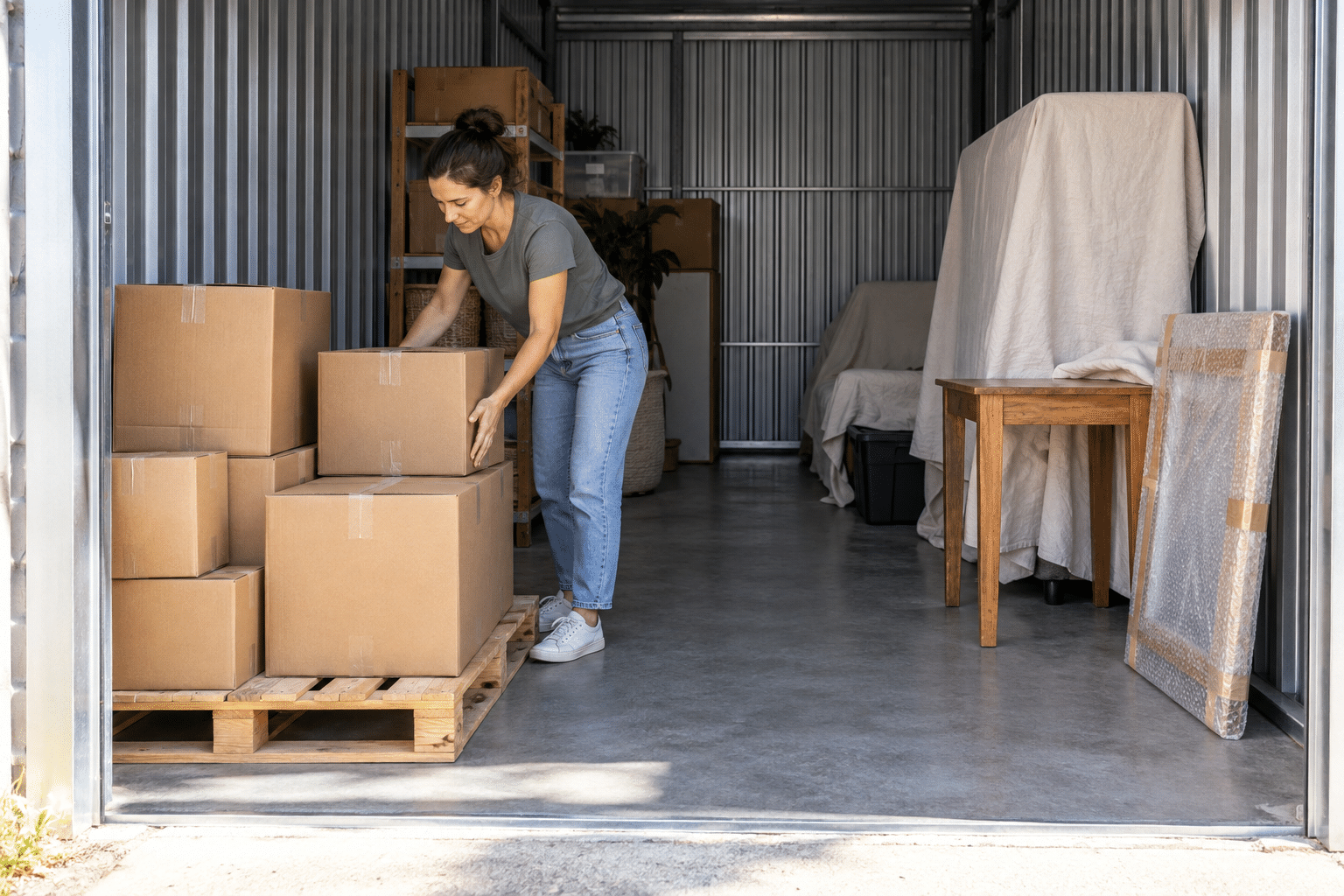
Raise boxes and suitable items using clean, dry pallets or stable shelving approved by the facility.
Keeping belongings off the floor reduces direct contact with concrete. It may offer some protection from minor spills, but it does not protect against flooding.
Check pallets for protruding nails, splinters, contamination and signs of pests.
Use a level base that supports the full weight of your items. Avoid placing heavy furniture on unstable platforms.
Distribute loads evenly. Before installing shelving or storing concentrated heavy loads, ask the facility about restrictions and floor capacity.
5. Protect Furniture With Suitable Covers
Use clean, breathable dust sheets for suitable furniture. They help limit dust without tightly enclosing items in plastic.
Choose purpose-made mattress bags and protective covers where appropriate. Make sure everything is completely dry before covering it.
Follow manufacturer advice for mattresses and upholstered furniture. Avoid prolonged storage positions that could distort their shape.
Disassemble furniture where practical. Label each part and secure fixings in a bag.
Planning your furniture storage before moving day helps you allow enough space for larger pieces without placing damaging loads on them.
6. Wrap Fragile Items Individually
Wrap glassware, ceramics and ornaments separately. Use suitable cushioning and fill empty spaces so items cannot move inside the box.
For delicate surfaces and suitable keepsakes, acid-free tissue provides a gentle wrapping layer. Avoid newspaper against surfaces that could absorb ink.
Use strong boxes and label fragile contents clearly. Pack plates upright with cushioning rather than in an unsupported flat stack.
Protect framed items with corner guards and appropriate packaging.
Explore these safe storage tips for valuable and fragile items for more guidance before packing delicate or irreplaceable possessions.
7. Stack Boxes With Weight Distribution in Mind
Put heavier, stronger boxes at the bottom. Place lighter boxes above them and keep fragile items away from loads that could crush them.
Use similar box sizes where possible. This makes stacks easier to arrange securely.
Avoid overfilling boxes or making them too heavy to lift safely. Reinforce the bases and seal them properly.
Do not use soft furniture, lamps or appliances as makeshift shelves.
Keep stacks stable and at a manageable height. Place frequently needed items near the entrance.
Label boxes on more than one side. Clear labels reduce unnecessary handling when retrieving belongings.
8. Leave Space for Access and Air Movement
Avoid filling every available gap. Leave a clear aisle so you can inspect and retrieve items without climbing over boxes.
Keep belongings slightly away from walls where practical. Do not obstruct vents or interfere with the unit’s designed ventilation.
Space around items can help air movement, but it cannot guarantee mould prevention.
Keep the door area clear so it opens and closes properly. Never leave the unit open unattended.
Plan your layout before unloading. Knowing where larger items belong helps prevent rushed stacking and makes future inspections easier.
9. Keep Food and Prohibited Materials Out
Food, crumbs and residues can attract pests. Check bags, drawers, appliances and camping gear before storing them.
Use suitable sealed containers for fully dry items. Never pack damp textiles into airtight tubs.
Do not bring pesticides, mothballs or strong chemicals without checking facility rules.
Review what you should not store in a storage unit before loading. Restrictions may include food, flammable materials, hazardous chemicals and other unsuitable contents.
Report droppings, damaged packaging or insects promptly. Ask the facility team how to respond rather than treating the unit yourself.
10. Check Insurance and Inspect Your Unit
Ask your insurer whether contents insurance covers belongings at the storage address. Do not assume your home policy automatically extends to storage.
Check the cover limit, excess, exclusions and limits for individual valuables.
The Insurance Council of Australia highlights accurate replacement costs as an important consideration when avoiding underinsurance.
Keep an inventory, photographs and receipts where available. Confirm how declared value and replacement value apply under your policy.
Visit periodically and check packaging, odours, moisture and stack stability. Learning how to protect belongings in storage includes noticing changes early and addressing concerns promptly.
Need Help Choosing Your Storage Space?
Guardian Self Storage can help you compare available sizes for household items, furniture and equipment.
Before booking, discuss your storage requirements with Guardian and confirm facility rules, availability and suitable preparation for your belongings.
Conclusion
Preventing damage starts with dry belongings, suitable packaging and stable stacking.
Allow access space, check insurance and inspect your unit regularly. These practical habits help keep your possessions in better condition throughout storage.