Running a growing Shopify store or eBay shop in Australia is exciting until your spare bedroom starts looking like a chaotic post office. Stock boxes stack up to the ceiling, bubble wrap covers the floor, and suddenly you are tripping over parcel bags just to get to your desk.
When your online store expands, you reach a tricky turning point. You need a real setup for business storage, but jumping straight into traditional commercial leases feels like a massive financial risk. Long lock-in contracts, expensive council rates, utility bills, and fixed square footage can quickly drain your cash flow before your store reaches its full potential.
Luckily, there is a much smarter alternative that thousands of savvy Aussie sellers are using right now: treating secure storage units at Guardian Self Storage as low-cost micro-fulfillment hubs.
Why Traditional Commercial Leases Hurt Growing E-Commerce Brands
When your sales spike, leasing a small industrial warehouse sounds like the next logical step. However, traditional commercial leases are designed for big, established corporations—not fast-moving online retailers.
Here is what traditional commercial leases force onto small online businesses:
- Long-Term Commitments: Most industrial landlords require 3 to 5-year lock-in leases. If your product demand changes or seasonal sales drop, you are still stuck paying expensive monthly rent.
- Hidden Overhead Costs: Rent is just the beginning. You also have to cover council rates, building insurance, electricity, maintenance fees, and water bills.
- Rigid Spatial Limits: If you suddenly import three extra pallets for the Christmas rush, you cannot temporarily expand your room. Conversely, during quiet months, you end up paying for empty space you aren’t using.
By turning a secure self-storage unit into a central operational base, you gain complete freedom over your e-commerce logistics. You pay only for the space you need right now, scale up or down smoothly, and skip heavy legal commitments entirely.
If you are just getting started, exploring options on how to find affordable self-storage space will help you figure out what layout fits your business best.
Setting Up Your Self-Storage Unit as a Micro-Fulfillment Hub
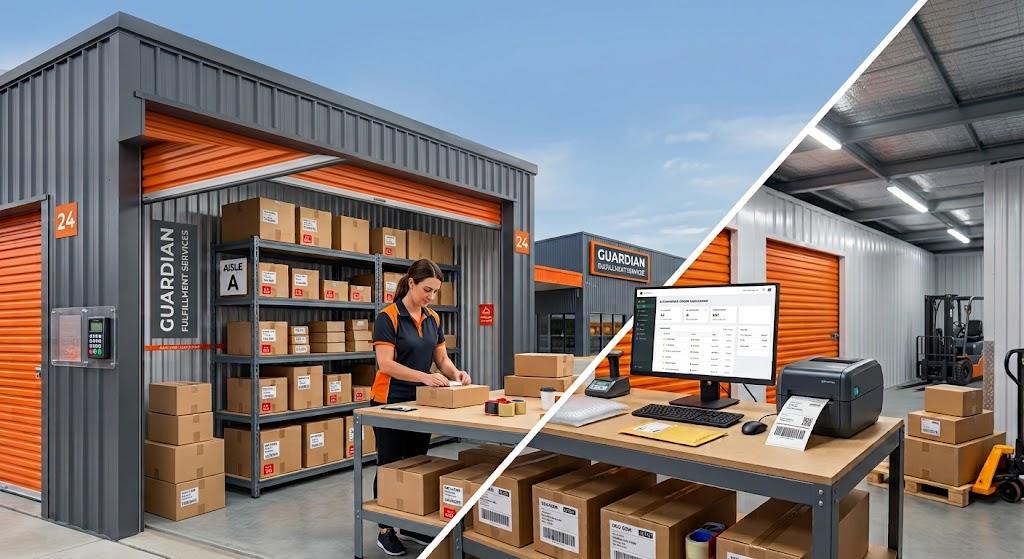
To run a fast packing operation out of a storage unit, you need to structure the space properly. A micro-fulfillment hub isn’t just a place to dump cardboard boxes; it is an active packing station designed for speed, accuracy, and efficiency.
Understanding Rack Mounting Rules and Safety Limits
To make the absolute most of your floor space, you need vertical shelving. However, storage facilities have clear guidelines to protect both your stock and the facility structure:
- Freestanding Heavy-Duty Shelves: Most facility contracts prohibit drilling holes into the metal or concrete walls of the unit. Stick to boltless steel shelving units or freestanding heavy-duty industrial racks that balance safely on the floor.
- Weight Distribution: Place your heaviest inventory (like bulk stock or liquids) on the lowest shelves to maintain a low center of gravity and keep the unit safe.
- Fire Clearance: Never stack boxes right up to the ceiling. Keep at least 50 cm of clear space below the top boundary or sprinkler heads so air flows properly and safety requirements are met.
Smarter Inventory Organization Systems
When a customer orders on your Shopify store, you want to pick, pack, and label that order in under two minutes. Setting up organized systems will make that happen:
- Use SKUs and Bin Locations: Number your shelves clearly (e.g., Aisle A, Shelf 2, Bin B). Sync these bin locations with your inventory management software (like TradeGecko, Shopify, or Zoho Inventory).
- The ABC Pick System: Place your high-volume bestsellers near the front door of your unit at waist height (Zone A). Keep slower-moving seasonal stock or back-up bulk stock high up or near the back wall (Zone C).
- Build an Ergonomic Packing Station: Reserve a dedicated spot near the entrance for a sturdy folding workbench, a wireless label printer, tape dispensers, and shipping bags.
For additional operational details on facility security and access rules, browse through these helpful answers to common storage queries to make your onboarding totally seamless.
Daily Logistics Operations: Deliveries and Access Hours
Running an e-commerce business means managing strict delivery timelines. You need reliable access to your stock and a seamless way to handle inbound supplier shipments.
Delivery Acceptance Services
One of the best hidden features of modern storage facilities is parcel and pallet delivery acceptance. Instead of staying home all day waiting for couriers, you can direct your stock deliveries straight to the storage facility address. On-site facility managers can accept inbound inventory from couriers, sign for deliveries, and securely store items until you arrive.
Flexible Access Hours
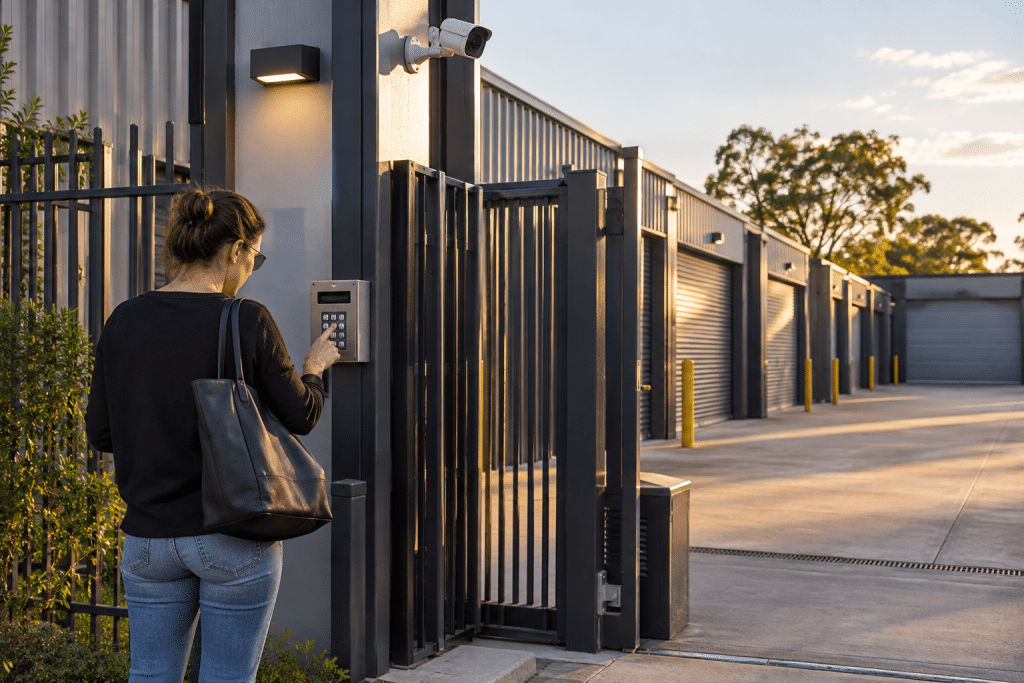
E-commerce sales don’t shut down at 5:00 PM on Friday. During peak shopping events like Click Frenzy, Black Friday, or Boxing Day, you might need to pack orders late into the night or early in the morning. Look for facilities offering extended access or 24/7 PIN code gate access so you can collect stock and print labels whenever demand spikes.
To see how tailored setups safeguard valuable company assets, read about dedicated options for commercial stock storage designed around real-world operational needs.
Protect Your Brand Assets and Business Inventory
Your inventory represents your business capital. Protecting it from physical damage, dampness, and theft is non-negotiable.
When choosing a storage facility, make sure it features:
- Climate and Moisture Protection: Ensure units are clean, dry, and well-ventilated so paper packaging, textiles, or delicate electronics are never ruined by humidity.
- Multi-Layer Security: Look for individual door alarms, CCTV surveillance, perimeter fencing, and unique electronic access codes.
- Insurance Options: Always maintain insurance cover on your stored stock so your business remains fully protected against unforeseen events.
Learning more about a complete security and asset protection strategy gives you complete peace of mind while focusing on growing your online marketing and sales channels.
Take Control of Your E-Commerce Growth Today
Scaling up an online store shouldn’t force you into scary financial commitments or messy home living spaces. By utilizing a flexible, cost-effective storage unit as a personal micro-fulfillment center, Australian e-commerce owners enjoy complete operational control, lower overheads, and the freedom to expand on their own terms. Organize your shelves, set up your packing station, and watch your order dispatch times drop.