Finding reliable boat storage in Caloundra is getting tougher every season. If you launch regularly near the Pumicestone Passage or head offshore past Point Cartwright, you know the post-trip struggle. You tow your rig home, only to realize the driveway barely fits your dual-cab ute, let alone a six-metre trailer.
Coastal housing blocks across Moffat Beach, Shelly Beach, and Dicky Beach are shrinking. Local councils patrol residential streets regularly, and on-street trailer parking rules catch boaters off guard with heavy fines.
Worse, the brutal ocean air rots gear quickly. Salt spray from Moffat headland travels over two kilometres inland on an onshore breeze. Within twelve months, exposed trailer brakes lock up, terminal blocks turn green, and gelcoats fade into dull chalk.
Choosing dedicated boat storage gives your boat a clean, secure space off the street. It saves your weekends, keeps your gear safe, and protects your resale value.
Why Driveway Parking Wrecks Boats on the Sunshine Coast
Many boaties assume an outdoor tarp in the driveway is enough. It is not. The subtropical coastal climate here creates three major headaches:
- Trailer Spring and Hub Rust: The combination of dew and wind-blown salt creates a permanent film on your trailer. Galvanized leaf springs and wheel hubs corrode fast, often failing right when you are reversing down the ramp at Golden Beach.
- Intense UV Damage: Summer sun breaks down PVC upholstery, cracks rubber fuel lines, and degrades bimini stitching in under two seasons.
- Theft Risks: Opportunistic thieves target residential driveways for high-value gear. Sounders, downriggers, stainless steel props, and marine batteries disappear overnight.
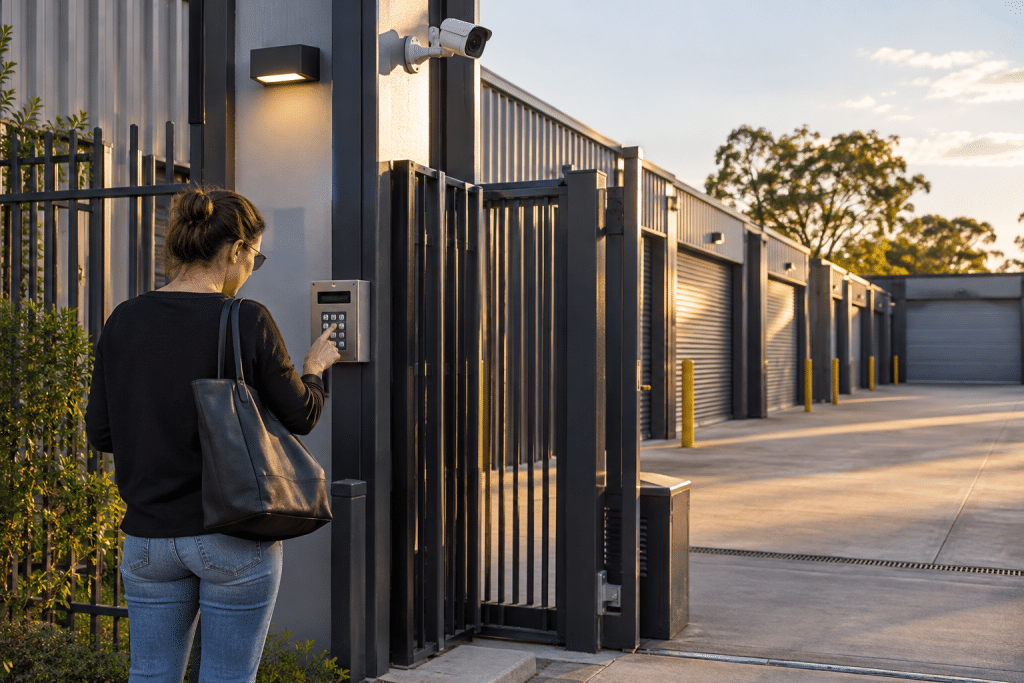
Moving your rig into a purpose-built Sunshine Coast facility removes these worries. Your boat stays locked behind secure access gates under continuous CCTV monitoring.
Comparing Boat Storage in Caloundra: Three Practical Options
Different hulls need different levels of protection. Match your boat type and budget to these three standard facility setups:
| Storage Type | Ideal Vessel Type | Weather Protection | Access and Practicality |
| Open Outdoor Hardstand | Heavy-duty tinnies, jet skis with marine canvas covers | Baseline security, open to weather | Wide turning paths, fast hookup |
| Covered Hardstand | Bowriders, fibreglass runabouts, wake boats | High UV and rain protection | Great overhead clearance for towers and t-tops |
| Fully Enclosed Unit | High-end offshore rigs, half cabins, tournament boats | Total defense against wind, rain, salt, and sun | Complete privacy; leave tackle locked on board |
1. Dedicated Outdoor Hardstands
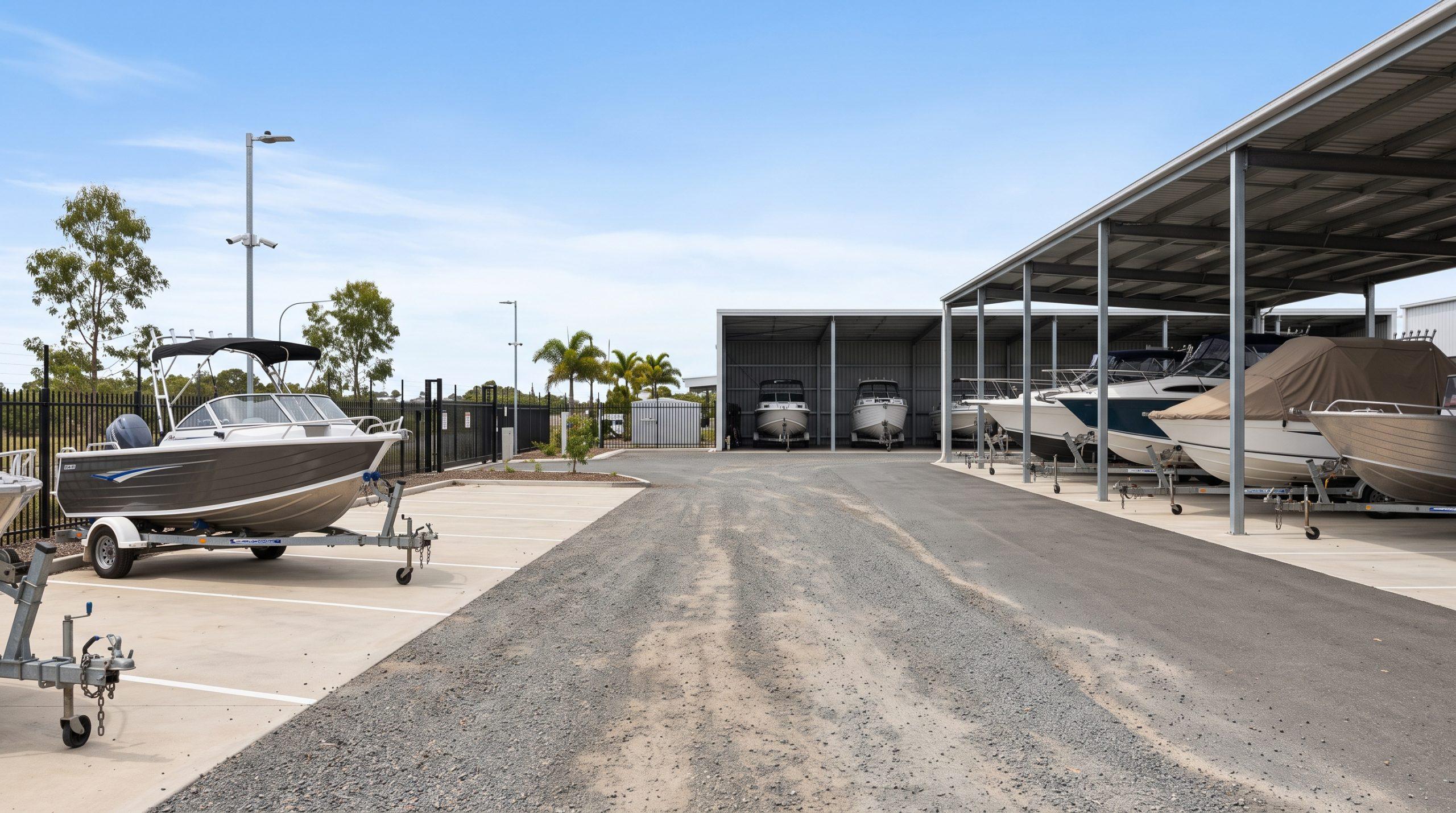
Hardstands provide a designated, level parking bay inside an access-controlled yard. They offer wide driveways, so backing in a wide trailer takes seconds. If you pick a hardstand, always use a tailored, breathable, water-resistant canvas cover. Add a sturdy hitch lock and wheel clamp for extra piece of mind.
2. Undercover Canopy Bays
Undercover parking provides a durable roof over your vessel. This layout shields your deck, sounder consoles, and upholstery from heat and destructive summer hailstorms. It also accommodates rocket launchers and wake towers without forcing you to strip down hardware after every trip.
3. Fully Enclosed Garage Units
For maximum security and complete shelter from salt spray, nothing beats a lock-up garage unit. You can back the entire trailer inside, lock the roller door, and leave your expensive rods, reels, and safety gear right on board. If you have extra camping gear, surfboards, or spare tackle boxes, you can rent Caloundra storage units and keep everything organized in one spot.
Real Dimensions: The True Boat Sizing Guide
The biggest mistake boat owners make is booking a storage space based on the hull length listed on their registration sticker. Facilities charge by the total physical footprint of your rig on the ground.
Always measure your trailer from the front tow-ball hitch back to the furthest edge of your outboard propeller when it is resting on its transom saver.
Measure the width from tyre wall to tyre wall across your widest axle. Do not forget guide poles or side-mounted spare wheels.
| Vessel Category | Registered Hull Length | Total Rig Length (Hitch to Prop) | Recommended Space Size |
| Jet Skis (Single or Double) | 2.8m to 3.6m | 4.2m to 5.0m | 3.0m x 6.0m unit or bay |
| Aluminium Tinnies | 3.5m to 4.5m | 5.0m to 5.8m | 3.0m x 6.0m unit or bay |
| Bowriders / Runabouts | 4.8m to 5.8m | 6.2m to 7.2m | 3.0m x 7.5m to 8.0m bay |
| Half Cabins / Offshore Rigs | 6.0m to 7.5m | 7.8m to 9.2m | 3.5m x 9.0m to 10.0m bay |
A 5.2-metre runabout routinely requires a 7-metre space once you factor in the trailer drawbar and tilted outboard engine. Measure twice before you book.
How Much Does Boat Storage Cost in Caloundra?
Storage rates vary based on whether you want an open pad, overhead shade, or a lock-up garage. In the Caloundra and Moffat Beach areas, monthly prices typically sit within these brackets:
- Outdoor Hardstand (up to 6m): $130 to $190 per month
- Outdoor Hardstand (up to 8.5m+): $190 to $270 per month
- Covered Canopy Bay: $240 to $340 per month
- Large Enclosed Lock-Up (6m x 3m to 9m x 3.5m): $380 to $600+ per month
Flexible month-to-month leases mean you can store your vessel securely during peak summer storm periods or keep it tucked away while you head out of town for winter.
Five-Step Pre-Storage Checklist for Saltwater Boaters
Do not simply back your trailer into a bay and walk away. Take twenty minutes to run through this routine:
- Flush with Fresh Water: Connect earmuffs or use direct flush ports right after pulling your rig from the salt. Let fresh water circulate until the thermostat opens to wash out salt deposits.
- Wash the Running Gear: Spray down trailer axles, leaf springs, and brake calipers. Spray running components and light plugs with a lanolin-based moisture barrier.
- Drain the Hull: Pull both bungs and wind the jockey wheel up high. This drains stagnant water, stopping bad smells, mold, and blistered gelcoats.
- Isolate the Power: Turn off the master battery switch. For storage over a month, disconnect the negative lead to stop parasitic battery drain from bilge sensors.
- Treat the Fuel: Coastal temperature swings create condensation inside half-empty tanks. Fill the tank and add fuel stabilizer to keep petrol fresh and protect injectors.
Ready to Launch Faster Every Weekend?
Having your boat stored minutes from local ramps makes water days easy. You skip crowded residential streets, hitch up fast, and head straight to the boat ramp.
If your driveway is crowded and you want clean, secure space, contact us to check current bay sizes, pricing, and availability.