Caravan storage cost Australia wide sits between $140 and $550 per month in 2026. When my partner and I rolled back from a four-month lap around Queensland, our narrow suburban driveway felt tighter than ever. Local council officers were cracking down on nature strip parking, and backing a 21-foot tandem axle van past our brick mailbox tested our marriage every single weekend.
We decided to look for off-site storage. That search turned out to be far more frustrating than expected. Some yards quoted by internal cabin length instead of hitch-to-bumper. Others buried surprise admin fees or locked their gates at sunset on Sundays.
Finding the right spot requires looking beyond the basic headline price. You need to know exactly how facilities measure your rig, how cover types impact your insurance, and what regional differences mean for your wallet. This 2026 guide breaks down real prices, sizing rules, and contract terms so you never pay for empty air.
What Dictates the Caravan Storage Cost in Australia?
The monthly rate you pay depends on four practical elements:
- Cover level: An open hardstand bay costs much less than an insulated, fully enclosed garage.
- Footprint and length: Facilities calculate the cost per m² based on your true total footprint.
- Geographic demand: Metropolitan centres in Sydney and Brisbane carry higher land values than regional towns.
- Security standards: Facilities with pin-code gates, CCTV cameras, and on-site staff command higher rates because they protect expensive touring rigs properly.
2026 Pricing Breakdown by Bay Type
If you ask how much to store a caravan, your answer starts with how much weather protection you want.
| Storage Bay Type | Typical Monthly Rate (GST-inclusive) | Cost per m² (Approx.) | Best For |
| Outdoor Hardstand Bay | $140 to $230 | $8 to $12 | Aluminium caravans, budget setups, quick turnaround trips |
| Undercover Storage | $230 to $390 | $13 to $19 | Off-road composites, vans with solar arrays, storm protection |
| Fully Enclosed Garage | $400 to $580+ | $20 to $32 | High-end caravans, hybrid pop-tops, lock-and-leave gear security |
Outdoor Hardstand Bay
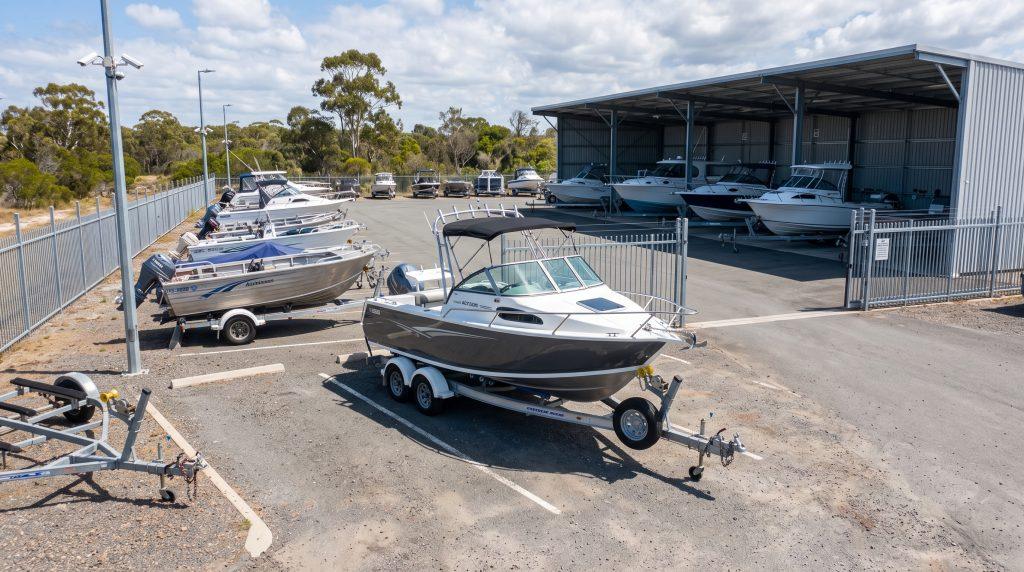
An outdoor hardstand bay gives you a dedicated parking spot on compacted road base, bitumen, or gravel. It offers the lowest entry price. The main trade-off is constant exposure to the harsh Australian sun. Over two or three years, UV rays degrade roof silicone, dry out tyre sidewalls, and fade exterior decals. If you pick an open bay, invest in breathable wheel covers and treat roof seals twice a year.
Undercover Storage
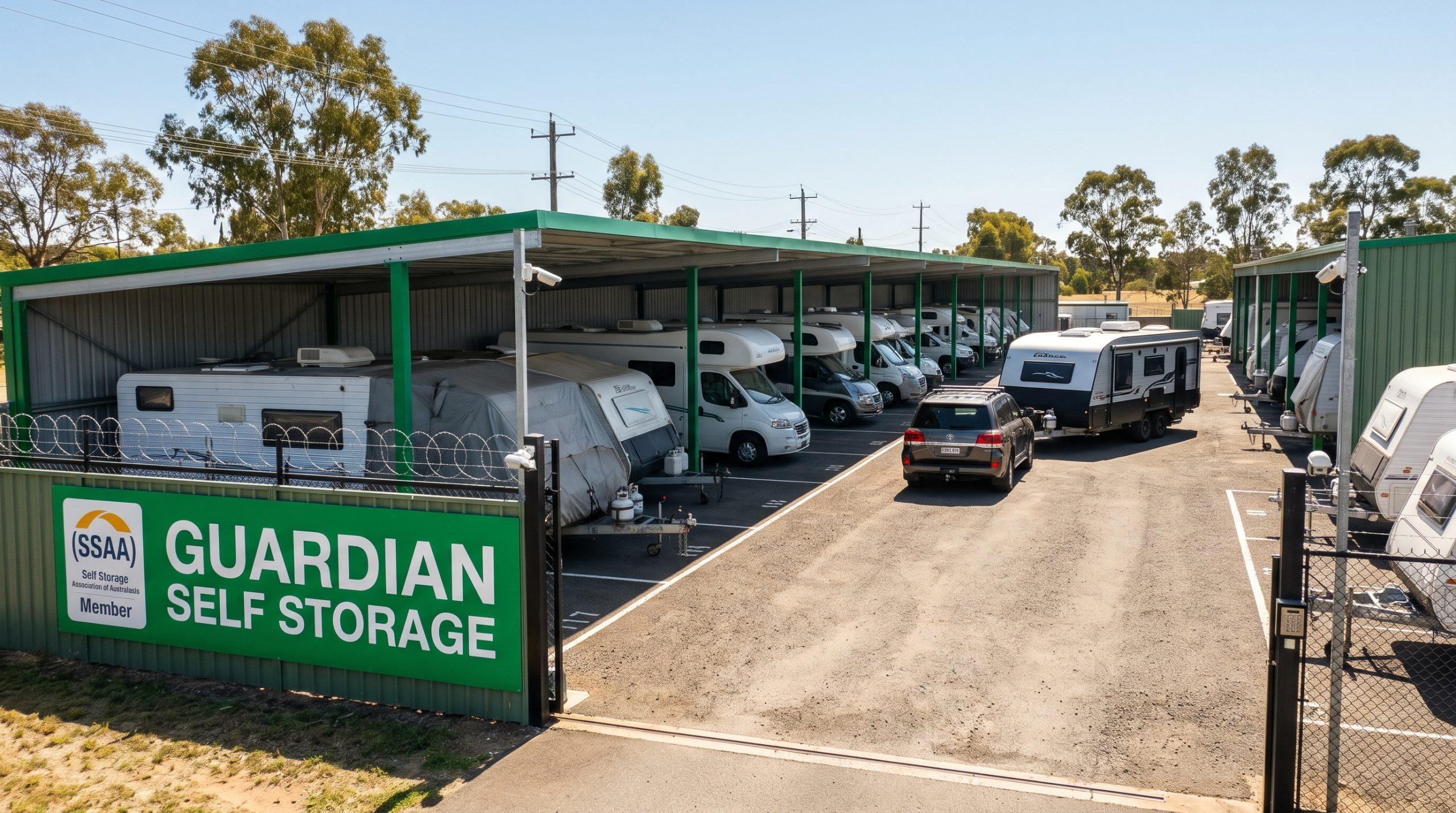
Undercover caravan storage prices sit in the sweet spot for many touring families. These bays feature high-clearance steel canopies or heavy-duty shade structures. They shield your rooftop air conditioners, skylights, and solar panels from baking heat and summer hail. Undercover bays prevent water pooling on roofs, which stops costly leak repairs before your next holiday.
Fully Enclosed Garage
A fully enclosed garage functions like a personal warehouse for your van. It gives you four solid walls and a lockable roller door. This option suits owners who keep expensive lithium power setups, mountain bikes, or generator boxes on their rigs. It keeps dirt, road dust, and prying eyes away from your pride and joy.
Regional Price Variations: Caravan Storage QLD NSW
Storage rates reflect local land supply and regional road travel habits.
Queensland (QLD)
Caravan storage QLD NSW comparisons show noticeable regional patterns. Coastal Queensland sees fierce competition for undercover bays. South East Queensland has thousands of holidaymakers living in master-planned estates with tiny driveways.
Transport and Main Roads (TMR QLD) strictly enforces road corridor parking rules, which pushes more owners toward commercial yards. Average rates in Brisbane and the Gold Coast hover around $190 to $250 for open bays and $310 to $420 for undercover bays. Regional yards in places like Rockhampton or Toowoomba drop by 20 to 30 percent.
New South Wales (NSW)
Greater Sydney remains the priciest storage market in the country due to tight land supply. Transport for NSW road reserves and tight council easements leave little room for street storage. Expect to pay $220 to $270 for outdoor hardstand spaces across Sydney. Undercover spots regularly top $380 to $460 per month. Hunter Valley and Central Coast hubs offer welcome relief, with prices dropping closer to Queensland baseline figures.
Sizing Up: Why OAL and Turning Radius Change Everything
Many new owners book a bay based on the number printed on their caravan door. That number is usually the internal cabin size, not your real travel footprint.
Always measure your Overall Length (OAL). This measurement runs from the tip of the tow coupling on the drawbar length right back to the spare tyre or jerry can holders on your rear bumper. A 19-foot internal van often measures 24.5 feet in real road trim.
Turning space matters just as much as bay length. A long tandem axle turning radius requires wide driveways. Tandem axles scrub hard when turning tightly. If a facility has 6-metre driveways between bay rows, parking your van can be stressful. A professional yard provides 10 to 12 metres of clear aisle clearance.
“Measure your rig from coupling to the tail light bracket before you book. Nothing ruins a morning like arriving at your new bay and discovering your drawbar sticks out into the roadway.”
Hidden Costs, Contracts, and Insurance Checks
Never judge a storage agreement by the monthly sticker price alone. Always inspect the terms:
- Transparent pricing model: Look for simple GST-inclusive monthly pricing with pro-rata billing when you leave.
- Contract flexibility: Choose a no lock-in contract that only asks for 14 or 30 days notice to vacate.
- Prepay discount incentives: Many operators offer a 5 to 10 percent prepay discount if you pay six or twelve months up front.
- Administration fee: Check whether the yard charges a one-off administration fee or an electronic gate fob deposit at sign-up.
- Payment methods: Set up a verified direct debit agreement so you never miss a due date while off-grid without mobile coverage.
- Insurance coverage: Ask your private caravan insurer about storage yard requirements. Most insurers insist on an SSAA accredited facility with locked perimeter gates. Check your contents insurance excess terms for off-site locations.
The Australian Competition and Consumer Commission (ACCC) monitors unfair contract terms across retail storage agreements. A reputable provider clearly explains cancellation rules, fee structures, and access policies before you sign.
How to Choose a Secure Storage Yard
Before you commit your rig to a facility, take an in-person tour during peak hours:
- Verify yard capacity: Overcrowded yards cause scrapes and panel damage when neighbouring drivers swing wide. Look for verified yard capacity where every bay has clear line markings.
- Review gate access hours: Check if the gate opens early enough for sunrise departures. Make sure you can return your rig late on a Sunday evening after long highway drives.
- Inspect surface drainage: Walk the bays after rain. Standing water around your tyres can cause rust on leaf springs, brake drums, and chassis rails.
- Speak to the manager: A local facility manager audit proves that staff actively patrol the perimeter, check wheel locks, and monitor visitor access logs.
- SSAA Accreditation: Look for the Self Storage Association of Australasia (SSAA) logo on the office door. SSAA members adhere to standardized, fair customer agreements and recognized security baselines.
Conclusion
Keeping your caravan safe between adventures protects your financial investment and saves your home driveway from clutter. While an open hardstand bay keeps ongoing expenses down, undercover spots provide vital defense against the harsh Australian elements. Take the time to measure your true total length, look over drive aisle widths, and ask for upfront pricing terms with no hidden surprises.
Find clean, secure, and flexible spaces for your rig with Guardian Self Storage.
Book your secure caravan bay today to protect your travel asset and free up your home driveway before your next long weekend escape.