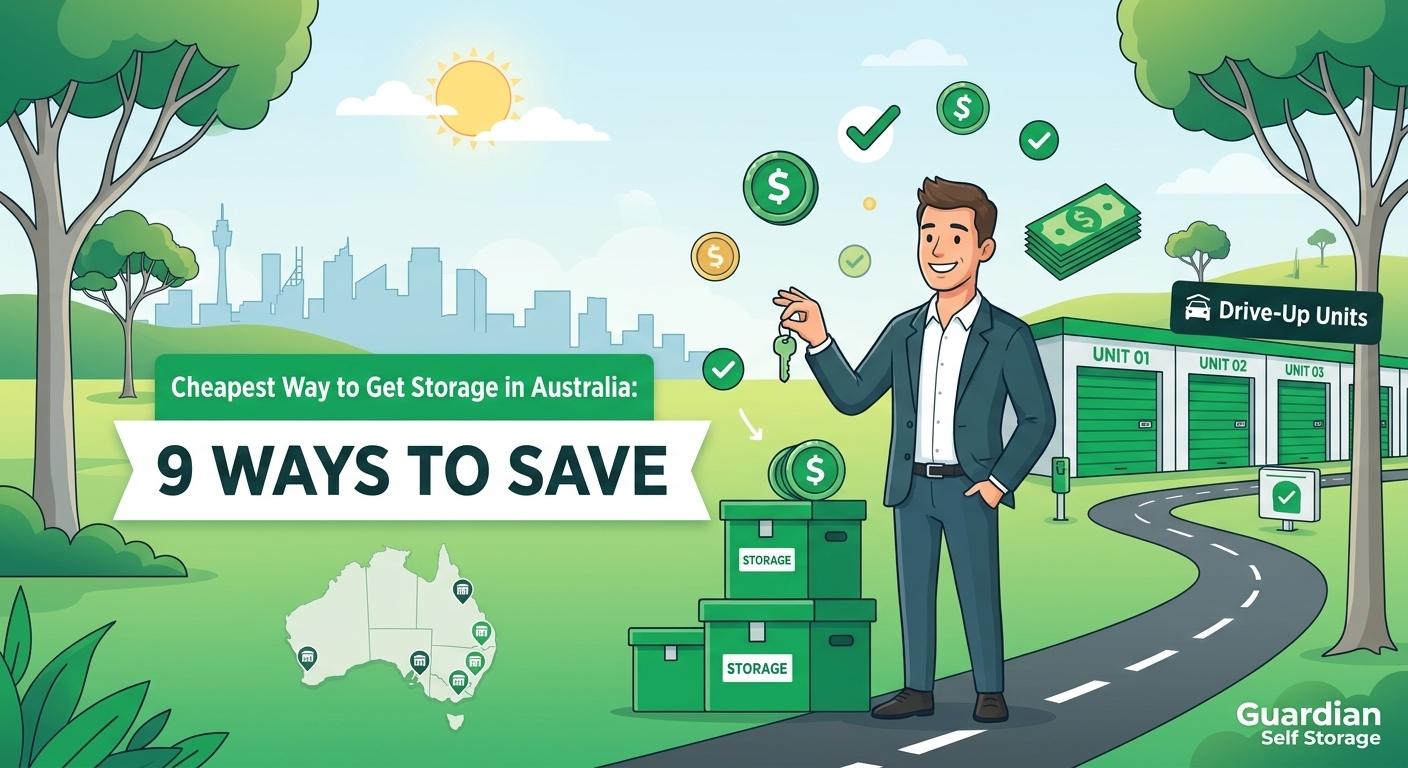
Finding the cheapest way to get storage in Australia shouldn’t feel like solving a complex puzzle. When I downsized my apartment in Brisbane two years ago, I thought grabbing a storage space would be straightforward. Instead, I faced hidden setup fees, surprise insurance rules, and quotes that varied by hundreds of dollars for the exact same floor area.
After comparing rates across multiple facilities and analyzing industry pricing structures, I uncovered real strategies that significantly bring down your monthly rate. Whether you need to hold furniture during a move or archive business stock, here are 9 practical ways to secure the cheapest way to store my stuff without sacrificing security or convenience.
1. Declutter First to Shrink Your Unit Size
The single biggest mistake people make is paying to store items they no longer need. Storage pricing directly depends on your total footprint. Calculate your cost per m² before signing anything.
- Sell or donate duplicates: Old appliances and bulky extra furniture double your required space.
- Audit high-volume items: Large plastic tubs filled with old paperwork or clothes add up quickly.
- The savings impact: Moving from a 3m x 3m unit down to a small storage unit (such as a 1.5m x 3m space) instantly slashes your monthly bill by up to 45%.
2. Right-Size Your Space and Pack for Height
Facilities charge based on floor space, but you pay for the full vertical volume. Standard storage units feature ceiling heights between 2.4 and 3 metres.
- Stack sturdy plastic crates to the ceiling rather than spreading boxes flat across the floor.
- Disassemble bed frames, dining tables, and shelving units.
- Store mattresses vertically along wall edges to preserve floor space.
Maximizing vertical space lets you rent a smaller footprint, drastically reducing your price per square metre.
3. Look for First-Month Discounts and Move-In Deals
Most major providers offer introductory promotions to attract new customers. Common deals include:
- A first-month discount (such as 50% off your initial period).
- Free move-in van hire or trailer access.
- Waived administrative setup costs.
Always ask if the quoted price is a GST-inclusive pricing figure. Confirming total costs upfront ensures no hidden surprises on your first invoice.
4. Choose an Upper-Level or Internal Unit Over a Drive-Up Unit
Accessibility drives rental pricing. A ground-floor drive-up unit offers maximum convenience, but you pay a premium for direct vehicle access.
If you do not need daily access to your belongings, choose an internal unit on an upper level accessed via a goods lift. Internal units often carry a lower monthly rate while offering identical security and climate conditions.
5. Opt for Flexible Month-to-Month Contracts
Locking into long-term commitments can backfire if your timeline changes. Look for facilities offering a flexible month-to-month agreement with no lock-in contract.
Flexible terms allow you to downsize to a smaller room the moment you empty out half your boxes. You pay only for the exact space you use, avoiding fees for empty square metres.
6. Take Advantage of Prepay Discounts and Direct Debit Options
If you know you will need storage for six months or longer, ask facility managers about early payment terms.
- Prepay discount: Many operators offer a 5% to 10% discount if you pay 6 or 12 months in advance.
- Direct debit setup: Automatic billing often waives recurring invoice processing fees, saving you $5 to $10 every billing cycle.
Over a full year, combining prepayment with automated billing keeps substantial cash in your pocket.
7. Review Contents Insurance Excess and Coverage
Australian Consumer Law requires storage operators to outline clear terms regarding facility responsibilities. While facilities maintain structural insurance, your stored goods require coverage.
Check if your current home and contents policy covers goods stored off-site. If it does, you can avoid purchasing duplicate cover from the facility. Always review the policy details:
- Verify the contents insurance excess amount.
- Ensure your item values match the policy cap.
- Confirm what risks are covered (fire, storm, theft).
8. Share a Unit with a Friend or Family Member
If you only have a few large items—like a surfboard, spare tyres, or seasonal camping gear—renting an entire room alone isn’t cost-effective.
Optioning to share a unit with a trusted friend or family member cuts your individual expenses in half. Split the monthly invoice via a direct bank transfer, and share access codes securely.
9. Claim Storage Expenses as a Tax Deduction (Business Use)
If you store trade tools, excess inventory, or physical business documents, your rental payments may qualify as a tax-deductible (business use) expense under Australian taxation guidelines.
Keep all tax invoices and receipts. Deducting storage as a legitimate operating expense effectively lowers your net cost at tax time.
Consumer Protections and Industry Standards
When shopping for affordable storage, protect your consumer rights. Industry standards and regulatory bodies keep operators accountable across Australia:
- Self Storage Association of Australasia (SSAA): SSAA member facilities use standardized agreements that clearly define tenant rights, notice periods, and fee structures.
- ACCC and Australian Consumer Law: Protects tenants against unfair contract terms, misleading pricing claims, or unannounced fee hikes.
- State Fair Trading Offices: The Queensland Office of Fair Trading and NSW Fair Trading handle disputes regarding bond refunds, access restrictions, or goods handling.
Always check that your chosen provider displays transparent pricing and complies with state fair trading standards.
Summary of Storage Cost-Saving Tips
| Savings Strategy | Key Benefit | Typical Impact |
| Declutter First | Reduces required floor space | Up to 45% lower rent |
| Pack Vertically | Maximizes total cubic area | Fits items in smaller units |
| Upper-Level Unit | Avoids ground-floor convenience premiums | 10% – 20% cheaper than drive-up |
| Prepay & Direct Debit | Waives recurring admin fee charges | 5% – 10% annual savings |
| Tax Deductions | Reduces taxable business income | Offset costs at tax time |
Conclusion
Finding the cheapest way to get storage comes down to smart planning, efficient packing, and selecting transparent facility agreements. By decluttering early, utilizing vertical volume, and choosing flexible terms, you can safely store your goods without overspending.
Ready to secure clean, reliable, and affordable space for your belongings? Explore flexible payment options and competitive rates at Guardian Self Storage today.
Looking for affordable storage near you? Contact our friendly team today to secure the best monthly rate on your unit!