Proper caravan battery storage care saves you thousands of dollars in premature replacements before your next big trip. Most tourers park their rig after a holiday, turn off the main cabin lights, and walk away for four months. When they return, their off-grid power bank is completely flat or permanently damaged.
Three summers ago, I learned this lesson the hard way in North Queensland. I left a dual 120Ah AGM battery bank connected to a standby stereo and a digital water tank gauge for eleven weeks. That tiny 0.4-amp parasitic draw drained the bank below 10.5 volts, causing irreversible battery sulfation. Replacing those two cells cost me $880 out of pocket and delayed our departure by two days.
Following clear solar maintenance protocols protects your electrical system while your van sits in a yard. When you understand your battery chemistry and storage environment, you extend your asset degradation curve and keep your rig ready to roll at a moment’s notice.
Why Caravan Battery Storage Care Protects Your Touring Budget
Modern off-grid caravans carry serious electrical hardware. Between lithium iron phosphate (LiFePO4) banks, inverters, and rooftop solar arrays, your power system represents a major investment. Neglecting battery cycle life optimization forces you into expensive CapEx replacement cycles years ahead of schedule.
According to guidance from the Battery Industry Council and Clean Energy Council Australia, heat and deep discharge are the two biggest enemies of stored deep-cycle batteries. High ambient temperatures inside a closed caravan accelerate self-discharge rates.
Safe Work Australia also highlights the importance of proper electrical isolation and ventilation when storing high-capacity energy systems. Treating your storage routine with certified auto-electrician guidance prevents both costly cell failure and electrical hazards.
Lithium vs. AGM: Setting Your Battery Management System (BMS) Specs
Different battery chemistries require opposite storage strategies. You must match your preparation steps to your specific battery management system (BMS) specs before locking the caravan door.
AGM and Lead-Acid Batteries
Lead-acid and AGM batteries hate sitting partially discharged. When voltage drops, lead sulfate crystals harden on the internal plates and block future charging.
- Charge to 100 percent first: Always put AGM batteries through a full multi-stage charge cycle right before parking your rig.
- Eliminate phantom loads: Switch off the master isolation switch or disconnect the negative terminal to stop parasitic draw from smoke detectors, radios, and Bluetooth monitors.
- Set a top-up charge frequency: Check voltage drop monitoring metrics every 4 to 6 weeks. If resting voltage drops near 12.4 volts, connect a smart charger using a safe trickle charge float voltage around 13.5 to 13.8 volts.
Lithium (LiFePO4) Batteries
Lithium banks work differently and require less maintenance during long breaks, provided you set the correct state of charge.
- Store at 50 to 60 percent capacity: Do not leave lithium batteries sitting at 100 percent charge in a hot storage yard. High voltage combined with summer heat stresses the internal chemistry.
- Respect depth of discharge (DoD) limits: Never store a lithium bank below 20 percent capacity, or the internal BMS may enter sleep mode and refuse standard chargers.
- Isolate the BMS: Press the power button on your lithium battery or throw the main circuit breaker so the BMS draws zero standby current.
“A tiny 300-milliamp phantom load from a caravan’s entertainment unit or breakaway monitor will quietly pull 216 amp-hours out of your battery bank over a single month. Always isolate at the terminal or master switch.” — Callum Reid, Certified Auto-Electrician & Off-Grid RV Specialist
Managing Your MPPT Solar Controller in Storage
Your rooftop solar panels can either maintain your batteries or accidentally cook them if configured poorly. Knowing how your MPPT solar controller behaves in storage is vital.
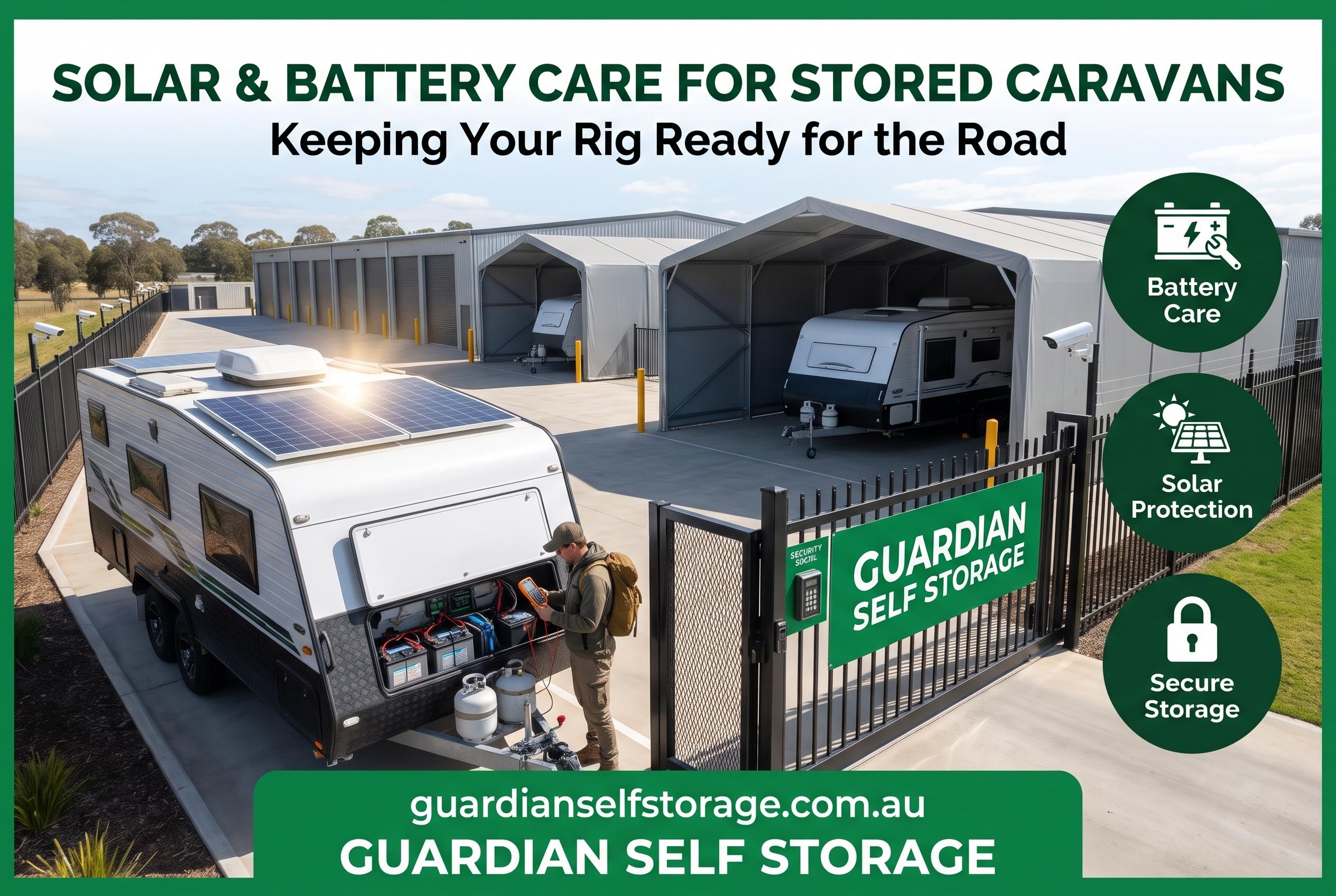
If you store your van outdoors, a quality MPPT controller can keep AGM batteries topped up automatically. Verify that your controller profile matches your exact battery chemistry and uses temperature compensation to prevent overcharging on 38-degree Australian afternoons.
If you store lithium batteries outdoors, you usually want to isolate the solar input once the bank hits 60 percent charge. Leaving solar active pushes lithium cells back to 100 percent every sunny morning, which shortens overall cycle life.
Covered Caravan Storage Pros and Cons for Power and Exterior Health
Where you park your van directly affects both your solar charging setup and your exterior bodywork. Weighing covered caravan storage pros and cons helps you pick the right bay for your rig’s layout.
| Storage Option | Solar & Battery Impact | Exterior & UV Protection | Best For |
| Covered / Undercover Bay | Blocks sunlight to rooftop panels; requires battery isolation or mains trickle access. | High UV damage caravan protection; prevents sealant cracking and paint fade. | Lithium rigs isolated at 60% charge and long-term seasonal layups. |
| Open-Air Hardstand Bay | Allows continuous solar charging for AGM banks via MPPT controller. | Full sun exposure; requires tyre covers, roof seal checks, and UV wax. | AGM setups needing regular solar float top-ups between frequent trips. |
Choosing a facility aligned with Self Storage Association of Australasia (SSAA) standards gives you clean, secure bays with wide turning circles. Whether you choose undercover protection or an open hardstand space, keeping dirt and salt off your roof keeps your solar panels efficient.
Coastal Caravan Storage and UV Damage Caravan Protection
Parking near the ocean introduces salt mist and intense ultraviolet radiation. Coastal caravan storage requires extra care to protect exposed electrical junctions and roof hardware.
Salt air corrodes exposed battery terminals, Anderson plugs, and rooftop solar MC4 connectors. Apply a light coat of dielectric grease or terminal protectant spray to all bare copper connections before parking your rig.
Strong Australian sunlight also degrades rubber roof seals, skylight plastics, and solar panel junction boxes. Even if you use an open bay for solar charging, fit heavy-duty tyre covers and apply UV protectant to rubber window seals to stop sun damage before it starts.
Pre-Storage Electrical Walkthrough Checklist
Run through this quick five-step routine every time you park your caravan for more than two weeks:
- Clean rooftop solar panels: Wash off red dust, salt spray, and bird droppings with fresh water so panels charge efficiently when needed.
- Switch off cabin appliances: Turn off the 12V water pump, fridge, inverter, and rangehood at their individual switches.
- Set your target charge: Bring AGM banks to 100 percent or adjust lithium banks to 50 to 60 percent.
- Trip the master isolation switch: Cut power to all non-essential circuits and verify zero current draw on your battery monitor.
- Log resting voltage: Record your exact resting voltage in your phone notes so you can spot any abnormal drop on your next visit.
Keep Your Touring Rig Protected and Ready to Roll
Smart power management takes less than fifteen minutes at the end of a trip, yet it adds years of reliable life to your caravan’s electrical system. Pairing proper battery isolation with a secure, well-maintained yard ensures your van stays safe from weather, theft, and premature wear. Ready to lock in clean, accessible protection for your rig between adventures? Explore secure storage options and reserve your bay today at Guardian Self Storage.
Tired of flat batteries and sun-faded seals ruining your holiday departure? Click through now to secure your caravan storage bay before the peak touring season books out!