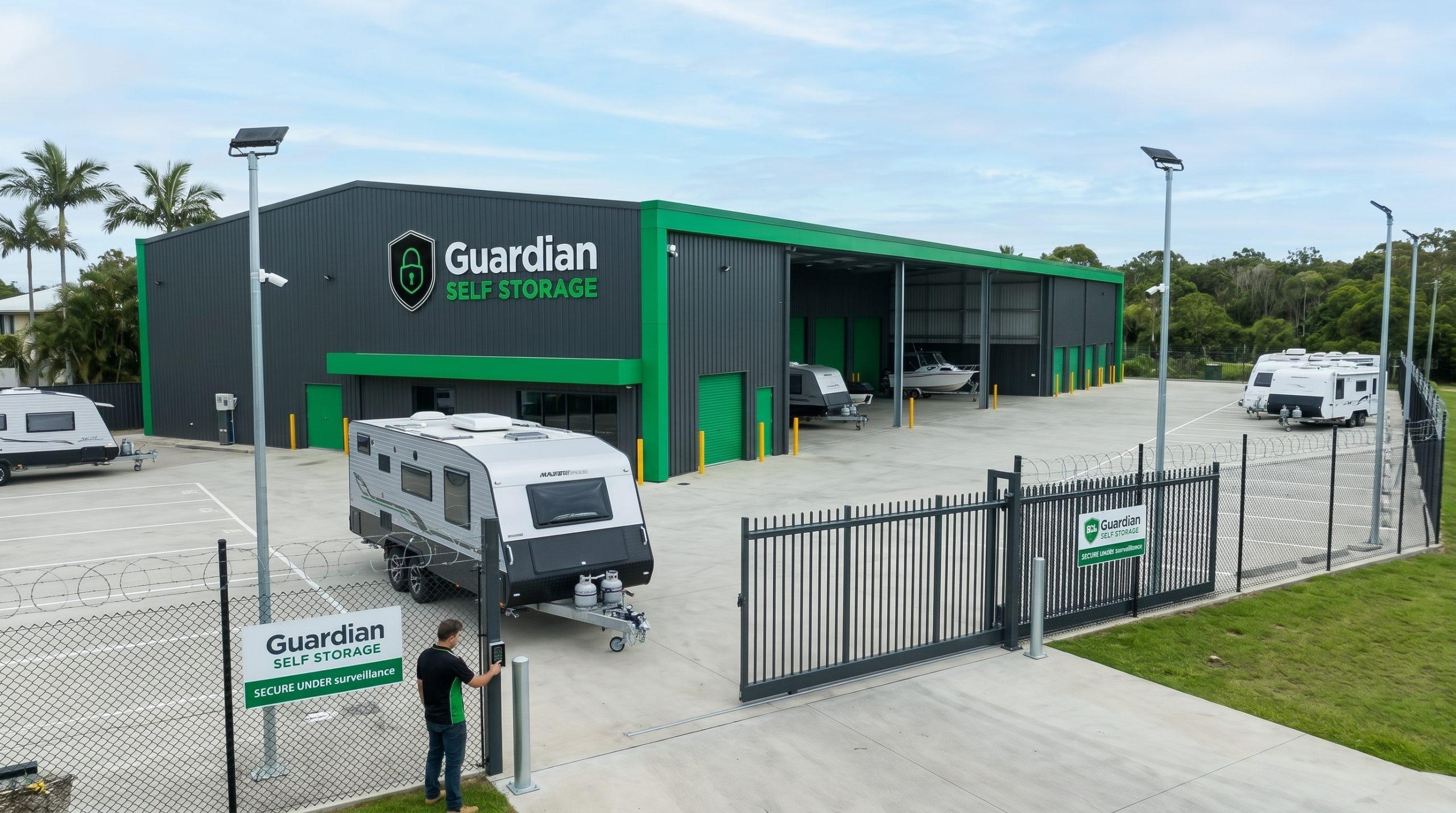
Using a comprehensive secure caravan storage facility checklist is the difference between true peace of mind and an insurance claim nightmare.
A mate of mine once parked his $90,000 custom off-grid caravan in a casual semi-rural compound south of Brisbane. The gate had an old padlock on a rusty chain, and the landlord assured him that everyone looked out for one another. Six months later, thieves snipped the wire fence on a stormy night, threw a tow ball into an unlocked coupling, and drove off with his pride and joy. When he called his insurer, the assessor rejected half the payout because the site lacked active perimeter controls.
Recreational vehicle thefts across Queensland and New South Wales continue to climb. Caravan syndicates do not just target older pop-tops for parts. They track late-model vans packed with expensive lithium battery systems, off-grid inverters, and high-end suspension kits.
Leaving your rig behind an unchecked gate is simply too risky. Before handing over a monthly deposit, you need to verify physical boundaries, access systems, and management standards in person. This practical guide walks through the exact seven security elements you must check to keep your caravan safe.
1. Perimeter Physical Barrier Testing and Anti-Ram Measures
A perimeter fence must act as a true deterrent, not just a property boundary marker.
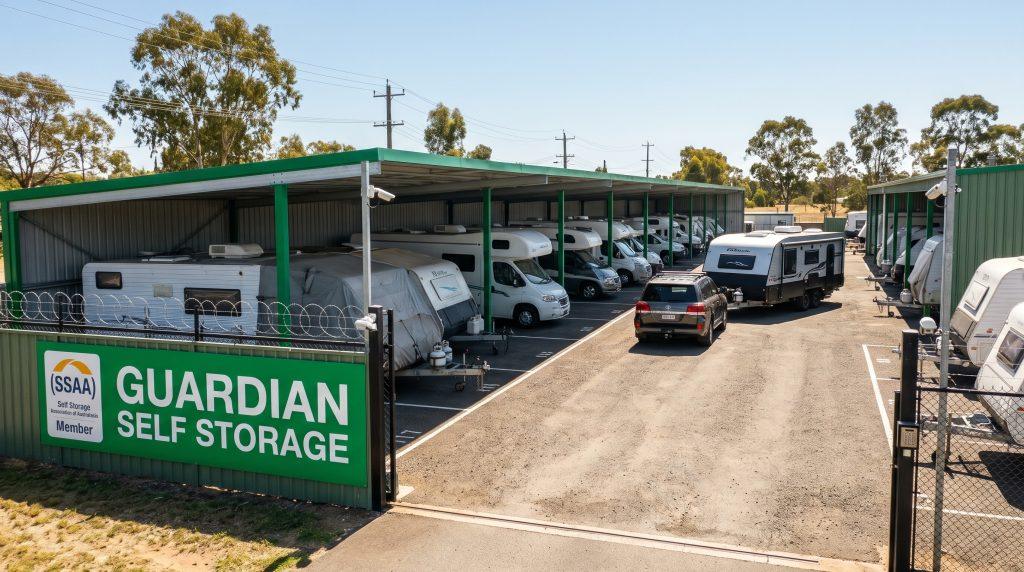
When you inspect a facility, walk the fenceline. Look for a minimum 2.1-metre chain wire or commercial steel mesh topped with three strands of barbed wire or razor tape. Check the bottom of the fence as well. Proper commercial sites bury the mesh 200 mm into the ground or set it into a concrete curb to prevent intruders from lifting it with a car jack.
Watch out for vehicle access vulnerabilities. If an open storage yard sits directly beside a quiet backroad with only thin wire mesh separating your van from passing traffic, it fails the basic perimeter physical barrier testing standard. Quality sites install anti-ram bollards or heavy earth berms inside the fenceline to stop runaway vehicles or targeted ram-raids.
2. Gate Security and Multi-Factor Authentication (MFA) Entry
A padlock on a sliding farm gate is an immediate red flag. A professional yard requires automated, commercial-grade gate systems.
Look for PIN-code gate access where every single tenant gets a unique, non-transferable code. Avoid places that hand out one universal keypad code for all customers. Universal codes never change, and hundreds of ex-tenants still know them.
Leading yards implement multi-factor authentication (MFA) entry. This pairs a secure smartphone app, RFID key fob, or Bluetooth beacon with a personal PIN.
Check for anti-tailgating protocols as well. The gate system should allow only one vehicle through per entry scan. If a driver slips in behind another car without logging in, the gate sensors should flag an alert on the access control system audit trail.
3. High-Resolution Infrared CCTV and Standards Compliance
Never settle for dummy cameras or cheap domestic webcams pointing into the dark.
A secure facility adheres to Standards Australia benchmarks, specifically AS 4806 for Closed Circuit Television (CCTV) management and AS 2201 for Intruder Alarm Systems. These standards govern video resolution, storage retention, frame rates, and camera placement.
Ask management these direct operational questions:
- Camera specs: Do they run 24/7 infrared CCTV with true night-vision and dynamic number plate recognition (ANPR) at the gate?
- Blind spots: Does the camera network cover internal driving aisles and individual bay monitoring, or just the front gate?
- Recording retention: How long is footage stored? The local police, whether Queensland Police Service (QPS) or NSW Police Force, typically need at least 30 days of historical high-definition footage to investigate organized theft patterns.
- Privacy compliance: Does the facility comply with the Privacy Act 1988 regarding CCTV surveillance compliance and data handling?
4. Lighting Quality: High-Intensity LED Floodlighting
Thieves and opportunistic vandals avoid brightly lit spaces. Poor lighting remains one of the top causes of after-hours compound break-ins.
High-intensity LED floodlighting should cover the entire property with overlapping light spreads. Shadows between parked vans create blind spots where thieves can spend hours cutting locks undetected.
Visit the yard after sunset before signing any contract. Check whether the yard feels bright and clearly visible from the main access roads. Good yards also use automated motion sensors that trip extra spotlights if movement occurs near parked caravans after standard operating hours.
5. Active Management and Security Log Audit Trail
Technology works best when backed by real human oversight.
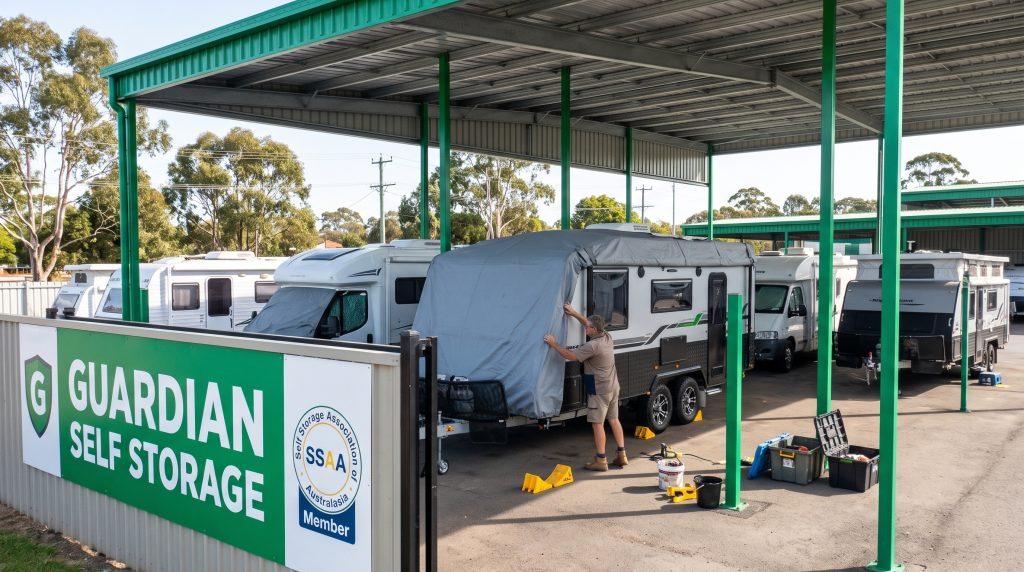
SSAA security compliance guarantees that a storage facility operates under strict industry guidelines. A critical component of these standards is on-site facility manager verification. A resident caretaker or dedicated daytime site manager notices unfamiliar people, odd parking behaviors, and suspicious vehicles right away.
Ask the operator how they manage incident tracking:
- System audits: Does their incident logging software record every successful gate scan, failed PIN attempt, and boundary trip?
- Routine patrols: Does the yard run scheduled daily ground patrols or employ night watch security teams?
- Overlocking procedure: If a tenant fails payment or abandons a bay, does staff carry out an overlocking procedure to secure the area and verify vehicle ownership?
6. Storage Facility Insurance Policies and Coverage Realities
One of the most common misunderstandings in the storage industry involves insurance. Many caravan owners mistakenly ask: does storage insurance cover caravans automatically?
The short answer is no. Standard storage facility insurance policies cover the building, fencing, and company infrastructure. They do not cover your personal vehicle or contents.
You must hold your own comprehensive policy, and you must review the insurance requirements for storing a caravan set by your underwriter. According to guidelines from the Insurance Council of Australia, insurers assess where and how your vehicle sits:
- Site security verification: If you tell your insurer that your caravan sits in a commercially monitored yard, they may require proof of perimeter fencing and electronic gate logging.
- Premium discounts: Storing your vehicle in an accredited facility often qualifies you for an insurance premium discount tier, saving you hundreds of dollars annually.
- On-site mechanical locks: Insurers frequently mandate that you use a hardened hitch lock and a rated wheel clamp even when parked inside a gated facility.
7. The Verification Checklist: What to Inspect Before Signing
To make your assessment straightforward, review this quick verification matrix during your on-site walkthrough.
| Security Feature | What to Look For | Pass / Fail Check |
| Perimeter Boundary | 2.1m+ chain wire or mesh, anti-ram barriers, no ground gaps | [ ] |
| Gate Access | Individual PINs, RFID/MFA verification, rapid anti-tailgate closing | [ ] |
| CCTV System | 24/7 infrared night vision, 30-day retention, ANPR gate tracking | [ ] |
| Site Lighting | Zero shadow pockets, continuous LED floodlights, motion triggers | [ ] |
| On-Site Oversight | Daytime site manager, security log audit trail, routine yard patrols | [ ] |
| Industry Accreditations | SSAA membership, AS 4806 CCTV adherence, AS 2201 alarm standards | [ ] |
| Individual Rig Security | Hitch lock allowances, wheel clamp space, wide turning access | [ ] |
Conclusion
A caravan is a massive lifestyle investment, and leaving it unprotected exposes you to preventable theft, malicious vandalism, and costly insurance headaches. Working through a clear secure caravan storage facility checklist guarantees that you choose an operator with the right hardware, active monitoring, and professional accountability.
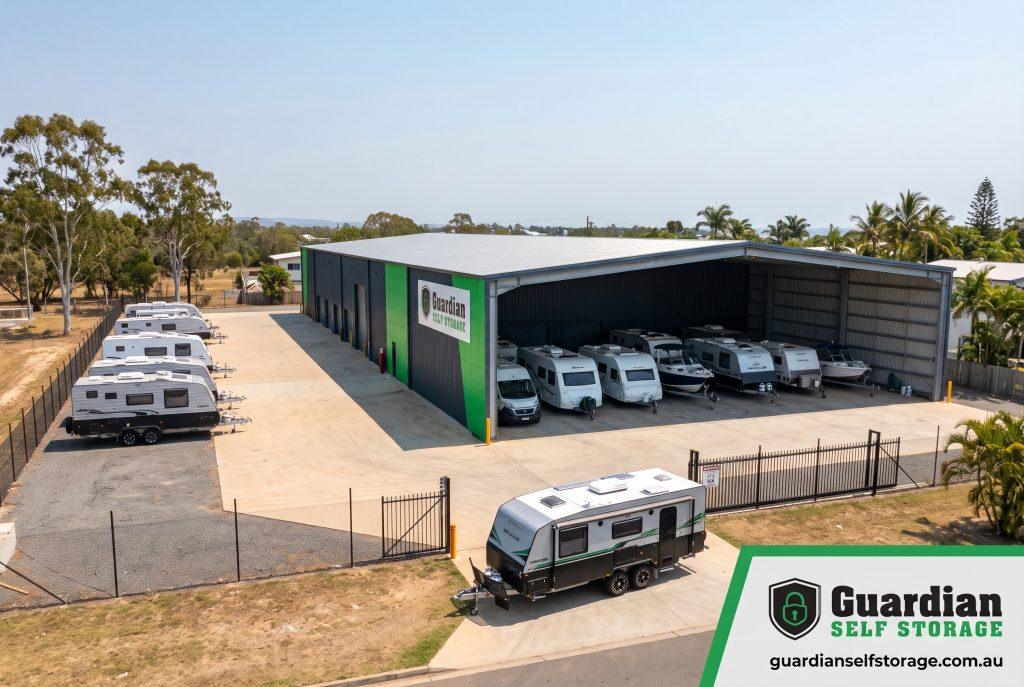
Take the time to inspect prospective facilities in person. Look past the marketing claims, test the gate access protocols, inspect the perimeter fencing, and verify camera positions. For industry-leading access control, heavy perimeter protection, and genuine peace of mind across Queensland and northern New South Wales, book your dedicated caravan bay with Guardian Self Storage and know your rig is safe between trips.
Ready to give your caravan the high-level security it deserves? Contact our friendly site team today to inspect our bays and lock in your space!