Looking for budget self-storage? Compare 1.5m x 1.5m lockers vs 1.5m x 3m small units. Learn vertical packing hacks and expose hidden costs before you rent.
What is the Cheapest Storage Option? Small Units, Lockers & Cost-Saving Hacks
Whether downscaling an apartment, clearing out a spare room, or keeping extra stock for a side hustle, monthly overheads add up fast. Finding budget self-storage isn’t just about picking the lowest price tag on an aggregator site. The real challenge lies in matching the physical footprint to your inventory while dodging fine-print fees.
Small storage options generally fall into two categories: compact storage lockers and small walk-in units. Choosing the right layout, maximizing unit volume, and avoiding fine-print traps can save hundreds of dollars a year.
Lockers vs. Small Units: The Price vs. Size Matrix
The most straightforward way to trim your bill is to buy only the floor space you will use. Most renters default to standard units, missing out on smaller options like storage lockers.
Here is how the entry-level options stack up:
| Feature / Metric | Storage Locker | Small Storage Unit |
| Typical Dimensions | 1.5m x 1.5m x 1m to 1.5m high | 1.5m x 3m (Full height, ~2.4m to 3m) |
| Floor Area | 2.25 m² | 4.5 m² |
| Usable Volume | ~2.25 m³ to 3.3 m³ | ~10.8 m³ to 13.5 m³ |
| Best For | Archival boxes, luggage, seasonal gear, sports kit | 1-bedroom flat items, small furniture, mattresses |
| Month-to-Month Pricing | Lowest absolute entry cost | Lowest cost per cubic metre |
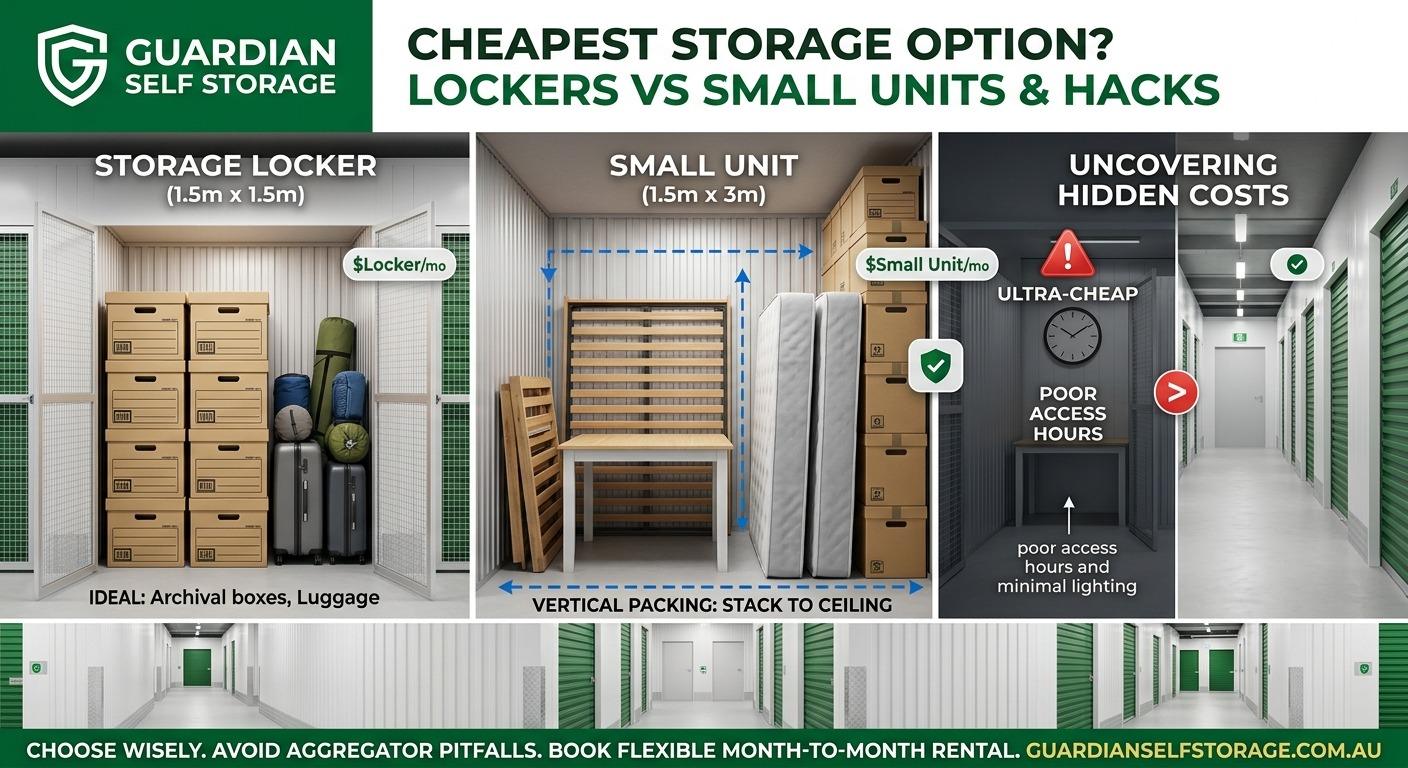
1. Storage Lockers (1.5m x 1.5m)
Lockers offer a compact, short-height footprint designed for stackable storage. If you only need to store ten to fifteen cardboard boxes, suitcases, seasonal camping equipment, or business archives, a locker avoids paying for air space overhead.
2. Small Units (1.5m x 3m)
A 1.5m x 3m small unit doubles the floor space of a locker and offers standard room height (usually 2.4 to 3 metres). This vertical space allows for stacking items high. While the monthly rate is higher than a locker, the cost per cubic metre is significantly lower, making it a smarter pick if you have furniture like a couch, bed frame, or washing machine.
Vertical Packing Optimization Hacks
Renting a smaller unit saves money only if everything fits. Most people measure space by floor area, but storage volume is three-dimensional. Using vertical height properly can help fit a 1.5m x 3m load into a 1.5m x 1.5m locker or small unit without forcing an upgrade.
1. Standardize Your Box Sizes
Mixing random grocery boxes creates gaps and unstable stacks. Use standard heavy-duty moving boxes or uniform plastic totes. Identical dimensions stack neatly like bricks, using every inch up to the ceiling safety margin.
2. Disassemble Furniture and Store Vertically
Never store a dining table flat on its legs—it wastes valuable floor space. Unbolt table legs, stand headboards upright, and store mattresses vertically along their edges using a protective plastic cover.
3. Hollow-Space Packing
Think of large furniture items as storage vessels.
- Pack clothes inside chest drawers.
- Tuck towels or soft goods into the drums of washing machines and dryers.
- Store smaller shoes or breakables inside suitcases.
4. Heavy-Bottom Tiering
Build a stable base by placing heavy plastic totes on the ground. Stack medium-weight boxes in the middle, and save light, fragile items or bags for the top tier. Keep a central access aisle if you need to retrieve items regularly.
Aggregator Pitfalls: Exposing the Hidden Costs of Ultra-Cheap Providers
Online storage aggregators highlight cheap headline rates to generate leads. However, an ultra-cheap advertised rate can come with hidden costs or inconvenient trade-offs.
1. Mandatory Admin Fees and Insurance Surprises
Aggregator listings often hide mandatory fees. An advertised rate of $40/month might carry a non-refundable $35 administration fee, mandatory lock purchase charges, or compulsory insurance premiums applied at checkout.
2. The “Introductory Bait” Strategy
Many ultra-budget providers use deep move-in discounts (e.g., “50% off your first month”) to secure bookings. Once your items are packed in the unit, standard rates kick in sometimes 20% to 40% above the local market average.
3. Compromised Security Measures
Extremely cheap operators often save costs on facility security. Older sites may rely on a simple padlock gate without individual unit alarms, pin code access gates, or modern CCTV networks. Fixing or replacing stolen or damaged items quickly wipes out any monthly rent savings.
4. Restricted Access Hours & Poor Maintenance
Budget facilities may restrict access to standard business hours (e.g., 9 AM to 4 PM weekdays), blocking access after work or on weekends. Lower maintenance standards can also mean poor pest control and lack of weatherproofing, exposing stored items to dust, moisture, and pests.
How Smart Renters Cut Storage Costs
Getting a good deal doesn’t require compromising on security or access. Use these cost-saving hacks before signing a rental agreement:
- Opt for Month-to-Month Rental Flexibility: Avoid rigid long-term contracts. A flexible month-to-month agreement allows you to downsize to a smaller unit as you sell off or retrieve items, keeping costs aligned with your space needs.
- Ask About Real Move-In Discounts: Inquire about genuine promotions upfront. Facilities often offer upfront prepayment discounts (such as pay for 5 months, get 1 free) without hidden rate spikes later.
- Downsize Before Moving In: The absolute cheapest storage space is the unit you don’t need. Sell, donate, or recycle low-value items before booking space to fit into a smaller footprint.
Final Thoughts
The cheapest storage option depends on managing volume and avoiding hidden fees. For small box counts and seasonal gear, a compact 1.5m x 1.5m storage locker works best. For larger moves, a 1.5m x 3m unit offers better value per cubic metre when packed vertically. Avoid low-quality budget traps that compromise on security or add hidden charges.
For straightforward, transparent pricing without hidden fees, explore secure options at Guardian Self Storage
to find the right footprint for your budget.