Understanding caravan insurance in storage Australia saves you from devastating financial shocks when your rig is off the road. Most owners assume their comprehensive policy covers everything the moment they park their van behind a locked gate. That assumption costs Australian travellers thousands of dollars every year in rejected claims.
Last winter, a Sunshine Coast retiree named Dave parked his $85,000 off-road van at a regional lot for four months. He switched his policy to save money, skipped updating his storage address, and missed a fine-print clause about hitch locks. When a summer hailstorm battered the yard and thieves later pried open a hatch, his insurer denied half the payout.
Insurance companies rely on strict risk-rated pricing. When your van stops moving, your risk profile shifts from highway collisions to stationary threats like weather and theft. Let us break down how your policy actually behaves while your van sits in storage.
Off-Road Cover vs. Storage Cover: Understanding the Shift
You do not pay the same rates when your van is parked as when you are towing across the Nullarbor. Insurers generally offer two ways to manage caravan insurance in storage Australia: keeping full touring cover or activating a lay-up insurance policy.
A lay-up insurance policy suspends your on-road accident protection for an agreed indemnity period, usually between two and six months. In exchange, your insurer slashes your premium because the risk of a highway crash drops to zero. However, you sacrifice all transit protection. If you tow the van home two days early to pack and get rear-ended, you have zero cover.
| Feature | Comprehensive Touring Cover | Lay-Up Storage Cover |
| Highway & Towing Accidents | Covered Australia-wide | Excluded during lay-up dates |
| Fire, Theft & Vandalism | Covered | Covered at nominated address |
| Storm & Hail Damage | Covered | Covered (subject to flood rules) |
| Annual Premium Cost | Standard full rate | Discounted by 15% to 40% |
| Address Flexibility | Any safe location | Strictly locked to one address |
What Your Policy Typically Covers in Storage
When you read through your PDS (Product Disclosure Statement) terms, stationary protection falls into distinct buckets. As long as you meet your policy conditions, insurers generally honour claims for the following events:
- Fire and Explosion: Electrical faults from trickle-charging solar panels or nearby grassfires.
- Theft and Attempted Theft: Stolen vans or structural damage caused by thieves trying to force entry.
- Vandal Protection: Deliberate malicious damage like smashed windows or graffiti while parked in a yard.
- Storm & Tempest Damage: High winds, falling tree branches, lightning strikes, and severe hailstorms.
“The single biggest mistake caravan owners make is treating a Product Disclosure Statement like a terms-and-conditions checkbox. Your storage postcode and physical security devices dictate whether a claim survives assessment.” — Senior Claims Consultant, Brisbane
What Isn’t Covered: The Hidden Traps in Your PDS
Conducting an honest insurance policy breakdown reveals several exclusions that catch owners off guard. Even the best policies refuse payouts for specific scenarios.
1. Flood Zone Rating and Storm Surge
Insurers draw a sharp line between rainwater runoff and rising floodwaters. If you store your van in a high flood zone rating area, standard policies often exclude inundation unless you pay for optional policy endorsements. Furthermore, storm surge damage from coastal cyclones is almost universally excluded across Australian insurers.
2. Gradual Deterioration and Vermin
Insurance covers sudden, accidental events rather than slow neglect. If rubber window seals perish in the sun and rain rots your timber frame, the insurer calls it wear and tear. Mice chewing through your 12-volt wiring or mould growing inside a closed fridge also fall outside standard cover.
3. Undeclared Contents and Annexes
Standard policies usually cap personal contents at $1,000 to $2,000. If thieves clean out your portable lithium power station, Weber BBQ, and recovery gear, you will absorb most of that loss unless you listed them separately.
Payout Math: Market Value vs. Agreed Value
If a severe hailstorm writes off your stored van, your total loss payout structure depends on how you set up your policy.
- Market Value: The insurer pays what your van was worth immediately before the damage occurred. Depreciation hits hard, often leaving you short of replacement funds.
- Agreed Value: You and the insurer lock in a fixed payout figure when you buy the policy. This costs more upfront, but it guarantees your exact payout figure minus your insurance premium excess.
How Safe Caravan Storage Features Protect Your Claim
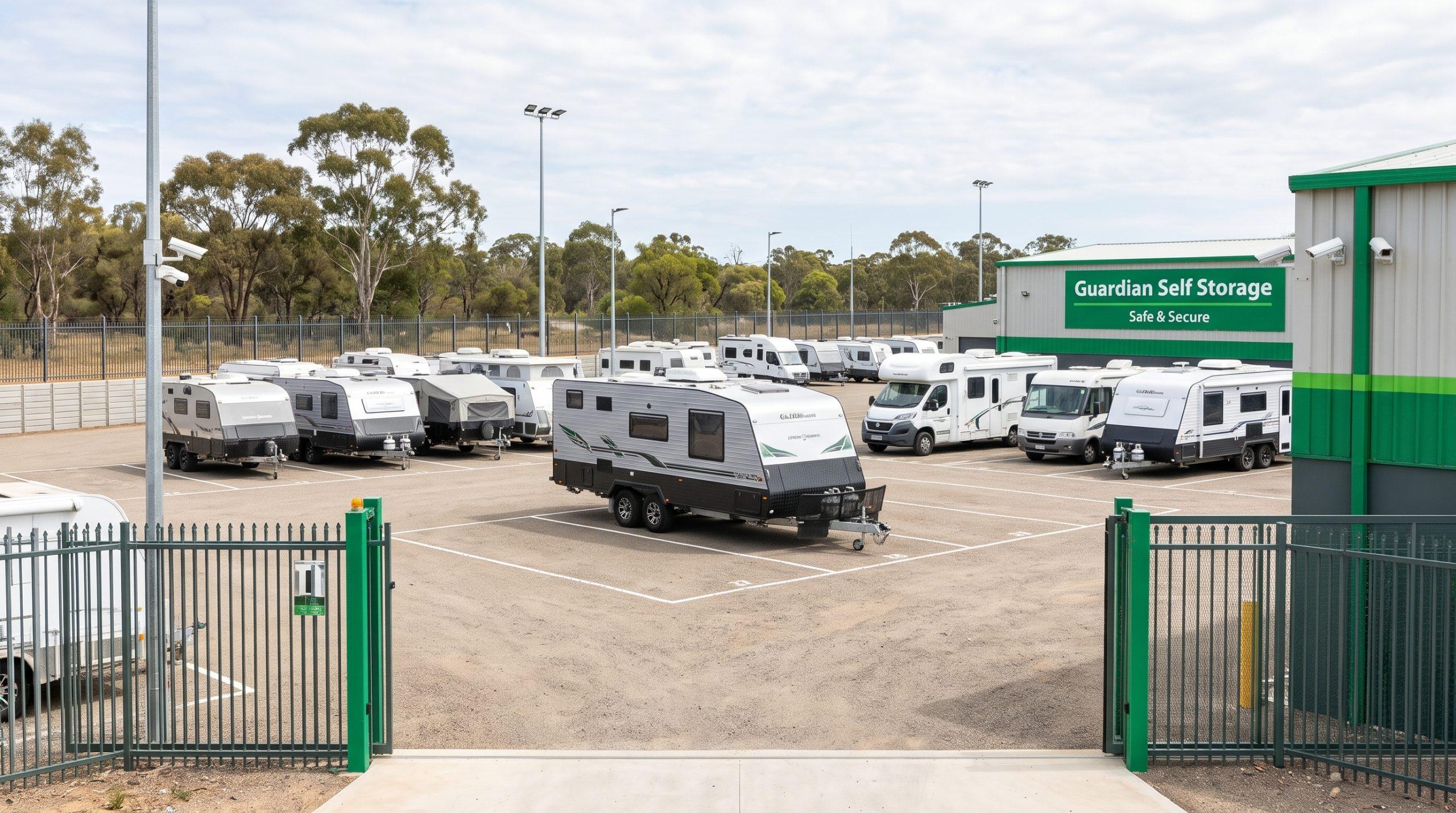
Insurers reward lower risk. Storing your van on a suburban street exposes it to opportunistic thieves and passing traffic. Moving your rig to a dedicated facility lowers your risk profile and keeps your security device compliance intact.
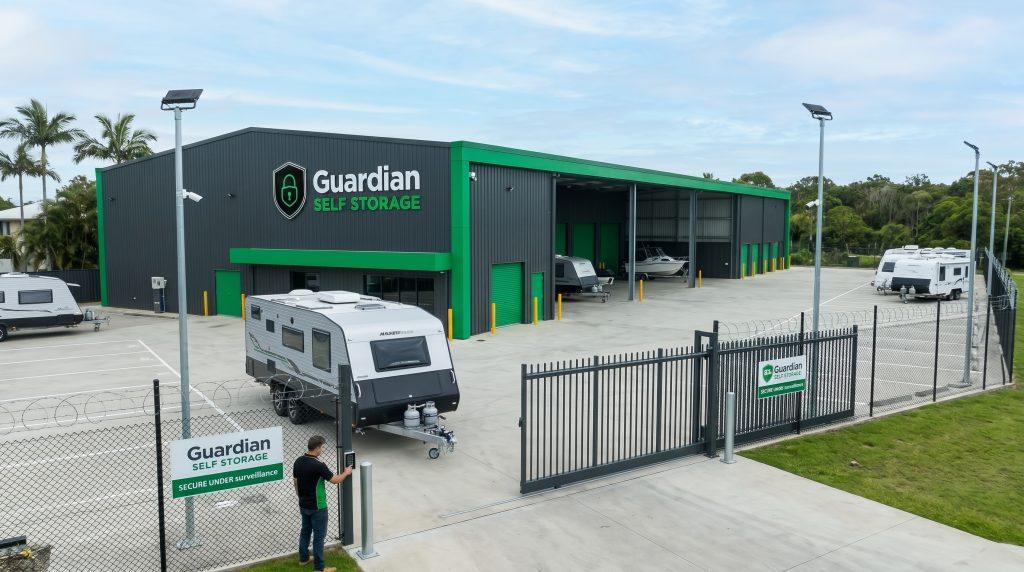
If you are researching caravan storage security QLD, look for facilities that satisfy strict underwriting standards. Insurers actively look for safe caravan storage features such as:
- Perimeter Fencing and Pin-Code Gates: Prevents casual walk-ins and tracks every vehicle entry and exit.
- 24/7 CCTV Vehicle Storage: High-definition cameras covering blind spots give police and claims assessors undeniable video evidence if an incident occurs.
- On-Site Management: Having staff physically present during business hours deters organized theft rings.
- Hardstand Surfaces: Keeping vans off dirt and grass reduces moisture buildup and rust.
Always request compliant storage verification in writing from your facility manager. Emailing a copy of your storage agreement to your insurer proves the van sits behind commercial security.
Your Rights and Consumer Protections in Australia
Navigating disputed claims requires solid financial literacy guidance. If your insurer rejects a storage claim unfairly, you do not have to accept their first answer.
The Insurance Council of Australia (ICA) sets the General Insurance Code of Practice, which requires insurers to handle claims transparently and within strict timeframes. If an insurer stalls or misinterprets your PDS (Product Disclosure Statement) terms, you can escalate the dispute for free through the Australian Financial Complaints Authority (AFCA).
For free legal advice on complex policy wording, the Financial Rights Legal Centre offers dedicated insurance law hotlines for consumers. Meanwhile, the ACCC monitors the industry to ensure insurers do not engage in misleading pricing or unfair contract terms.
4 Steps Before You Lock the Door
Protect your investment before handing over your keys for the season:
- Update Your Garaging Address: Notify your insurer the exact day your van moves to a storage yard.
- Fit Approved Locks: Use a heavy-duty coupling lock and wheel clamp that meet your policy rules.
- Photograph Everything: Take timestamped photos of your van’s roof, sides, and interior on drop-off day to prove pre-existing condition.
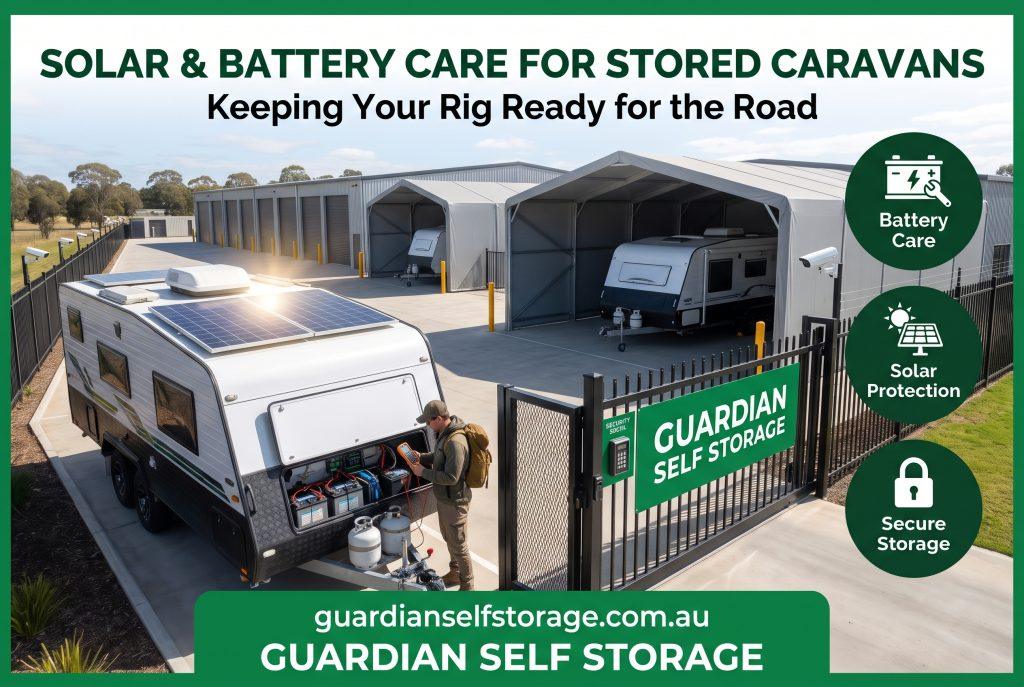
- Check Your Battery Setup: Disconnect non-essential loads so your solar regulator maintains battery health without overheating.
Final Thoughts
Getting caravan insurance in storage Australia right comes down to matching your policy fine print with real-world security. Do not leave a six-figure asset exposed to avoidable weather damage or policy loopholes. Choose a facility built around proven protection, keep your insurer updated, and verify your cover before you walk away.
For peace of mind across Queensland and Northern NSW, explore the secure, purpose-built facilities at Guardian Self Storage today.
Ready to lock in total peace of mind for your next off-road season? Check out our available caravan bays and claim your free storage quote in under 60 seconds!