Knowing how to store a vehicle starts with choosing suitable space and preparing it properly. Parking and locking up alone will not prevent flat batteries, moisture damage, or tyre problems.
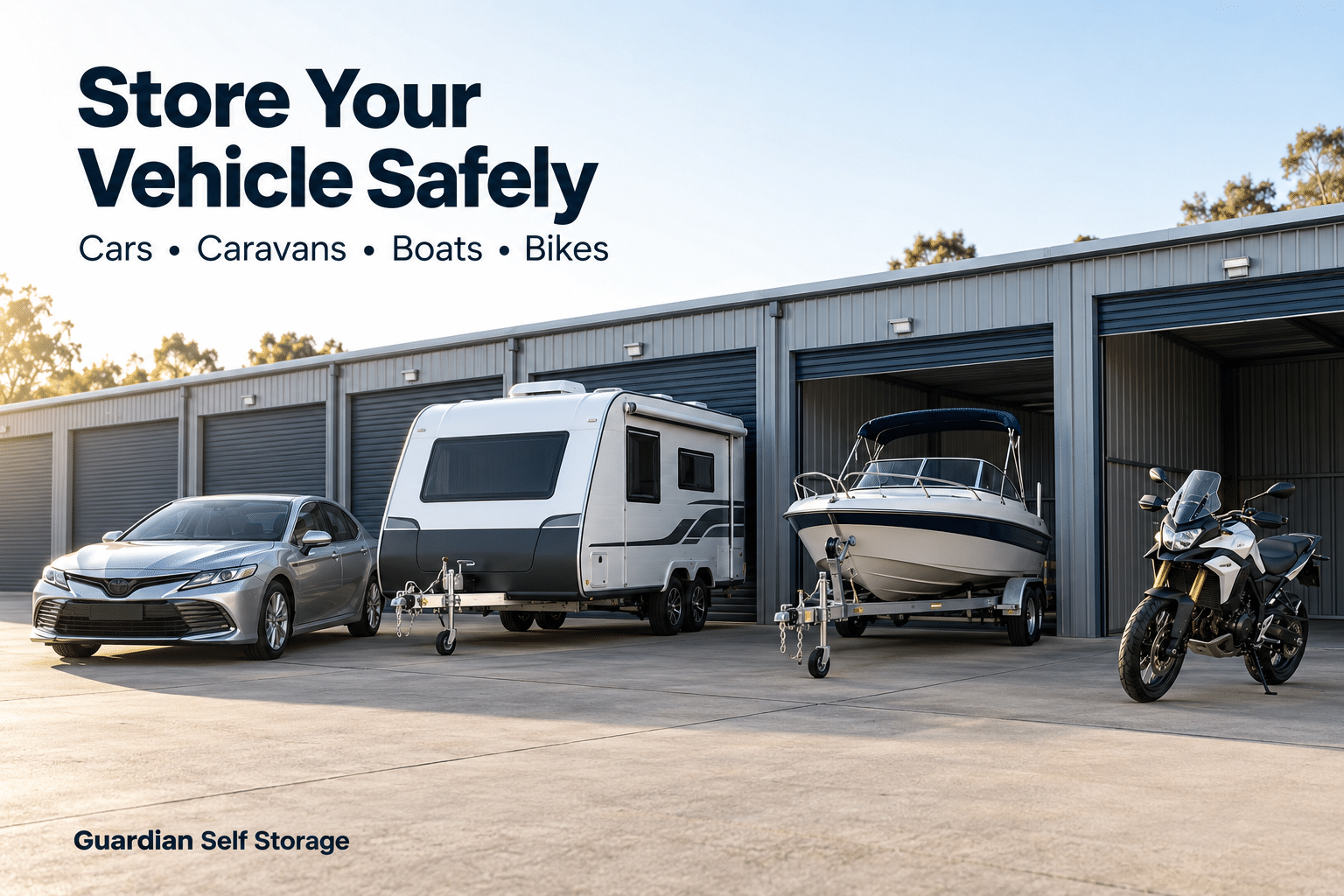
Cars, caravans, boats, and bikes need different care. Storage conditions also matter, especially during Queensland’s humid weather.
Whether you need space between trips or for several months, follow a clear preparation routine. This guide covers sizing, maintenance, security, and checks before returning to the road or water.
How Do You Choose Safe Vehicle Storage?
Start with the vehicle’s measurements, including accessories. When choosing caravan storage, allow room for the drawbar, roof fittings, and safe access around your caravan.
Measure:
- Overall length, including the towbar or trailer drawbar.
- Width, including mirrors and awnings.
- Height, including roof racks, aerials, and air-conditioning units.
- Space needed to open doors and inspect the vehicle.
Check entrance dimensions separately from the storage space. A vehicle may fit inside but fail the doorway’s height clearance.
For trailers, confirm turning room and reversing access. Ask whether the site accepts your vehicle type and requires it to remain operational.
Should You Choose Indoor or Outdoor Storage?
Indoor storage offers more protection from sun, rain, and windblown debris. However, enclosed space still needs suitable ventilation.
Outdoor storage may suit larger caravans, boats, and motorhomes. Check drainage, surface condition, and exposure to trees.
Choose a fitted cover suitable for the vehicle and conditions. Avoid trapping moisture beneath plastic sheeting.
A drive-up unit can simplify parking, provided its dimensions and vehicle-storage rules suit your needs.
How Should You Prepare a Car for Long-Term Storage?
Wash the car, including areas where dirt collects. Dry it thoroughly before covering it.
Vacuum the interior and remove food, rubbish, and valuables. Check for leaks before moving into storage.
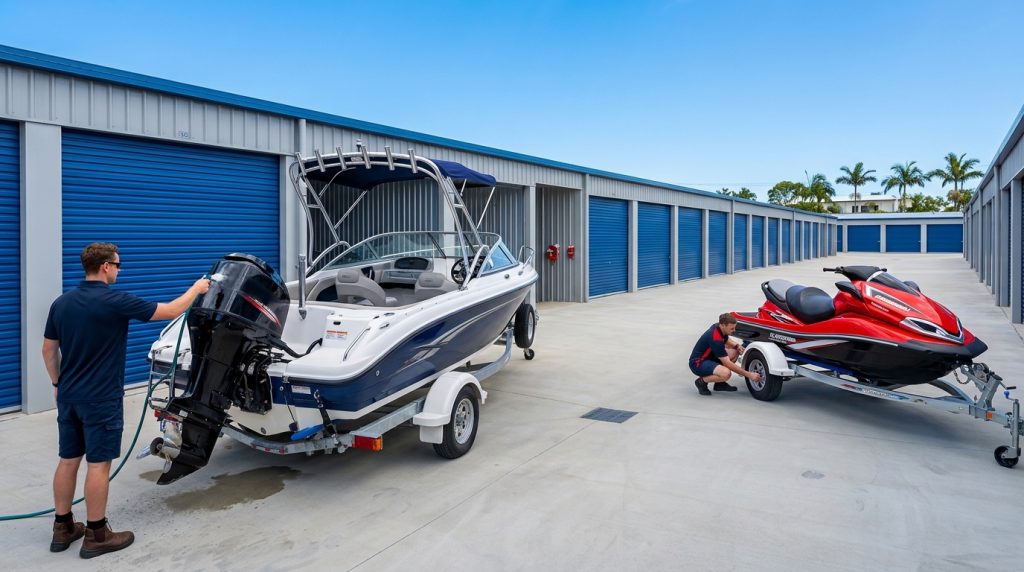
When choosing boat storage, allow space for the trailer, outboard motor, and safe access around the vessel.
What Should You Do About the Battery?
Follow the manufacturer’s storage instructions. Battery disconnection can affect alarms, electronics, and settings.
Ask whether the facility permits a compatible maintenance charger and provides suitable power. Never assume charging is available.
For electric vehicles, follow the manufacturer’s recommended storage charge level. Avoid applying petrol-car advice to traction batteries.
RACQ highlights battery charge and maintenance as factors affecting battery life.
How Do You Protect Tyres and Fluids?
Check tyre pressures against the manufacturer’s guidance. Ask a mechanic about additional precautions for lengthy storage.
Check servicing needs and fluid levels. Discuss fuel preparation with your mechanic, especially when storing for months.
Follow the handbook for parking brakes, wheel chocks, and transmission settings. Secure the vehicle against movement.
Never run an engine inside an enclosed storage unit.
How Should You Store a Caravan or Motorhome?
Clean the exterior and inspect roof seals, windows, and awnings. Repair leaks before storage.
Inside, remove food and clean cupboards. Empty and dry the fridge, securing its door slightly open where practical.
Prepare freshwater, wastewater, and toilet systems according to the manufacturer’s instructions.
Keep permanent ventilation openings unobstructed. Check cushions and cupboards for dampness during storage.
Switch off appliances and follow the correct shutdown procedure for batteries and gas systems.
Confirm the facility’s rules for LPG cylinders. Do not leave loose fuel containers or prohibited hazardous materials inside.
For servicing advice, consult your manufacturer or repairer. The Caravan Industry Association of Australia provides industry information and resources.
How Should You Store a Boat or Jet Ski?
Rinse salt and dirt from the hull, trailer, and equipment. Let everything dry before fitting a cover.
Flush the engine exactly as the manufacturer directs. Boat and jet ski flushing procedures vary, so avoid guessing.
Check trailer tyres, bearings, lights, straps, and coupling condition. Secure the vessel properly to its trailer.
Remove wet lifejackets, towels, and ropes. Dry them before storing them separately.
Check drainage arrangements so rainwater cannot collect. Follow the owner’s manual for drain plugs and refitting them before launching.
Use suitable hitch security and a wheel clamp where appropriate. Record identification numbers and photograph the vessel’s condition.
How Should You Store Motorbikes and Bicycles?
Clean and dry the bike before putting it away.
For motorbikes, follow manufacturer guidance for fuel, battery care, tyres, and chain maintenance. Use a stable stand on suitable ground.
For bicycles, clean the drivetrain and lubricate it appropriately. Avoid leaning heavy items against wheels or frames.
Follow the manufacturer’s storage instructions for e-bike batteries. Confirm whether the facility permits lithium batteries and charging.
Keep keys, helmets, and valuable accessories somewhere secure.
How Can You Control Humidity and Pests?
Check for condensation, musty smells, and damp upholstery during visits.
Moisture absorbers may help in suitable enclosed spaces. They cannot fix leaks or replace proper ventilation.
Remove food and nesting materials. Ask about the facility’s pest control arrangements.
Do not block required ventilation while trying to exclude pests. If you fit temporary protective barriers, label them clearly.
Remove every temporary barrier before using the vehicle.
What Security and Access Features Matter?
Ask about gated access, CCTV coverage, lighting, and site management.
Confirm how gate code or keypad access works. Keep your code private and report lost access credentials.
Check whether 24/7 access is available. Access hours and security features can vary by location.
Ask about the monthly rental, deposit, notice period, and additional charges.
When comparing options at Guardian Self Storage, discuss your vehicle’s dimensions and preferred access times. Confirm availability and site-specific rules before booking.
What About Rego and Insurance?
Check your rego before driving or towing to storage and again before collection.
Transport for NSW and Queensland TMR provide registration and permit guidance. Maritime Safety Queensland provides boating safety information. Boat and trailer registration are separate matters.
Tell your insurer where you will store the vehicle. Check comprehensive cover, agreed value, excess, and exclusions.
Laid-up insurance may reduce premiums and cover during agreed periods. NRMA Insurance offers options with specific storage and usage conditions. Read your policy before changing cover.
What Should You Check Before Collection?
Inspect tyres, fluids, batteries, brakes, lights, and signs of pests or leaks.
Remove covers and temporary barriers. Arrange professional checks if anything looks abnormal.
Before booking, contact Guardian Self Storage to confirm a suitable space and your facility’s requirements.
Conclusion
Safe vehicle storage combines suitable space, careful preparation, and regular checks.
Follow manufacturer guidance, confirm insurance and registration arrangements, and inspect your vehicle before using it again.