Learning how to winterize a caravan in Australia looks very different depending on where you park your rig. While southern travellers worry about frosty nights in the Victorian High Country, owners across Queensland and Northern NSW face a completely different enemy: relentless humidity, tropical downpours, and severe storm seasons.
Two years ago, a Gold Coast couple named Sarah and Mark parked their 22-foot touring van under a backyard tarp after an autumn trip. They skipped basic humidity prep because winter felt mild. By early summer, trapped condensation had bloomed into black mould behind their overhead cabinetry, warping the plywood and ruining $4,500 worth of soft furnishings.
Preparing your rig for off-season storage is smart asset preservation expenditure. A few weekends of targeted maintenance prevent catastrophic rot, electrical corrosion, and rejected insurance claims.
Why Australian Wet Seasons Demand a Different Approach
Standard overseas guides tell you to drain water tanks to stop pipes from freezing. While plumbing anti-freeze matters if you store your van in Tasmania or the Snowy Mountains, high-humidity regions demand climate hazard mitigation.
Warm air holds massive amounts of water vapour. When temperatures drop overnight in sub-tropical regions, that moisture condenses on cold aluminium frames, roof hatches, and under-bed storage boxes. Without airflow and moisture control, fungi take hold within 72 hours.
Step-by-Step: How to Winterize a Caravan in Australia
Follow this proven checklist before locking your van away for the wet season or cooler months.
1. Roof and Exterior Envelope Inspection
Water intrusion ruins structural timber faster than almost anything else. Climb up safely and inspect every penetration point on your roof.
- Roof Seam Resealing: Check silicone joints around air conditioners, solar brackets, and skylight domes. Scrape away cracked sealant and apply fresh UV-stable marine-grade polyurethane.
- Window Rubber Conditioning: Wipe down all perimeter seals with warm soapy water, let them dry, and apply a silicone-based rubber protectant so gaskets stay supple and watertight.
- Awning Mildew Prevention: Extend your awning completely on a sunny afternoon. Scrub both sides with mild soap, rinse thoroughly, and ensure the vinyl is bone-dry before rolling it back up.
2. Plumbing and Grey Water Prep
Stagnant water breeds bacteria and leaves foul odours in your lines.
- Drain Fresh Tanks: Open all low-point drain valves and empty your fresh water tanks completely.
- Drainage Line Blowout: Use a low-pressure air compressor attachment (under 30 PSI) to clear remaining water droplets from your taps, hot water service, and shower hose.
- Flush Grey Water: Rinse your grey tank with a dedicated bio-enzyme cleaner and leave the valve closed once dry so pests cannot crawl inside.
“In coastal Queensland, humidity causes more interior write-offs than hail. If you seal a damp caravan up tight without desiccants, you are building a greenhouse for mould.” — Senior Caravan Technician, Sunshine Coast
3. Interior Humidity and Air Circulation
Once the exterior is sealed, focus on keeping the cabin dry.
- Deploy Moisture Absorbers: Place large hanging moisture absorbers inside wardrobes and position spill-proof desiccant tubs on the floor and kitchen benchtop. Check and replace them every four to six weeks.
- Prop Up Cushions and Mattresses: Stand your mattress on its side and lift seat cushions away from timber bases so air circulates underneath.
- Leave Fridge Doors Ajar: Wipe down your fridge with bicarbonate of soda and latch the door in the ventilation position to stop rubber seals from sticking and growing mould.
Matching RV Storage Space Requirements to Your Rig
Where you park matters just as much as how you prep. Leaving a van on soft backyard grass invites rising damp straight into your chassis and floor ply. Choosing a facility that follows SSAA (Self Storage Association of Australasia) standards protects your investment from ground moisture and storm runoff.
When calculating your RV storage space requirements, measure your van from the tip of the tow coupling to the rear bumper bar, including spare tyres and jerry can holders.
| Caravan Style | Typical Length | Key Facility Requirement |
| Single Axle Camper | 14 to 17 ft | Standard hardstand bay with good drainage |
| Pop Top Caravan | 16 to 19 ft | Check pop top caravan clearance height (2.4m to 2.7m) for covered bays |
| Dual Axle Touring Van | 20 to 25 ft | Wide dual axle caravan storage bay for easy reversing |
| Off-Road 5th Wheeler | 25 to 30+ ft | High-clearance canopy (3.5m+) and wide turning circle |
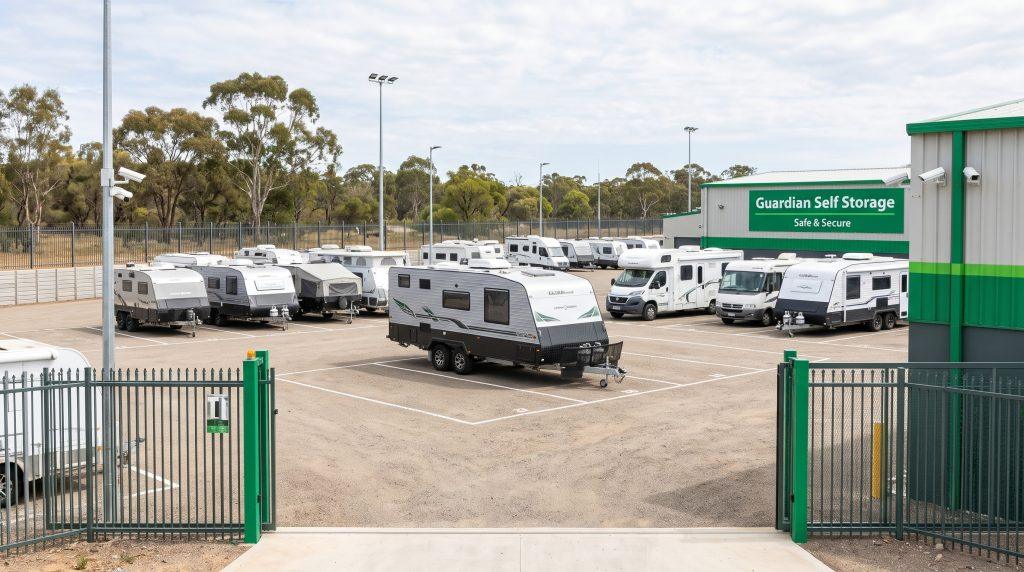
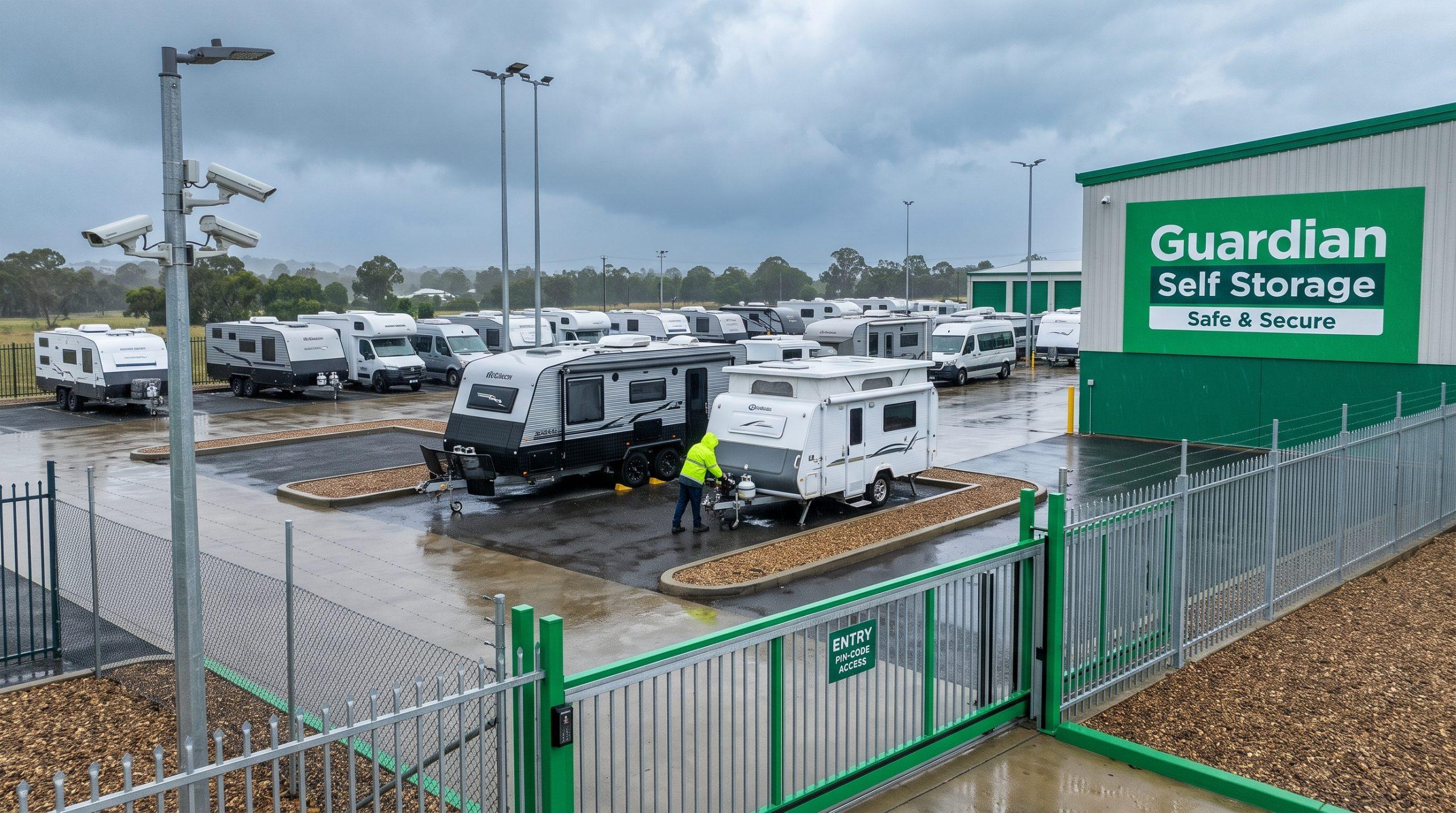
Look for facilities built with elevated parking pads made of compacted gravel, asphalt, or concrete. Elevated hardstands ensure heavy tropical downpours drain away beneath your axles instead of pooling around your tyres and wheel bearings.
Wet-Season Disaster Readiness and Insurance Protection
Applying tropical & sub-tropical storage expertise means planning for extreme weather before storm warnings hit the news. Monitor forecasts regularly through the Bureau of Meteorology (BOM) during peak storm months from November through April.
If severe weather threatens your region, follow guidance from local Emergency Services (QFS / NSW SES) and verify your storage facility’s flood history. Parking in a flood-prone backyard creates massive uninsured loss exposure, because standard policies often exclude floodwaters unless you pay extra.
According to the Insurance Council of Australia, poorly maintained seals also give insurers grounds to reject storm damage claims under gradual deterioration clauses. Keeping dated photos of your roof resealing and storage receipts protects your replacement cost valuation (RCV) and shields your claims history impact if a severe hailstorm ever strikes.
Final Thoughts
Mastering how to winterize a caravan in Australia comes down to beating moisture before it starts. Seal your roof seams, blow out your water lines, load the cabin with desiccants, and get your tyres off damp grass. A solid storage setup keeps your rig fresh, dry, and ready to hitch up the moment the skies clear.
For purpose-built yards designed to handle tough Australian weather conditions, explore the secure, well-drained storage options at Guardian Self Storage today.
Want to keep your rig dry, elevated, and storm-ready all year round? Check our available caravan bays online and lock in your storage quote in under 60 seconds!